Showing posts with label Scott S reviews. Show all posts

Friday, April 19, 2024

Music Book Review: The Past is Always Present: The Revival of the Byzantine Musical Tradition at Mount Athos by Tore Tvarno Lind

The Past is Always Present: The Revival of the Byzantime Musical Tradition at Mount Athos
by Tore Tvarno Lind (Music 782.3 Lin)

Before Gregorian chant came Byzantine chant! The beginnings of what we now call “Western Civilization” largely focused on an area of the Mediterranean where the boundaries between West and East shifted and overlapped over millennia. On the West, we had ancient Greece; on the East, we had Byzantium, the area now called Turkey, and its capitol Constantinople. The two were mostly separated by the Aegean Sea, though they share a border on land approximately 120 miles long. It is the area of Byzantium from which Byzantine chant gets its name, a tradition that started around the time of the establishment of Constantinople in 330, and continued to evolve until roughly 1453. In between, this whole area enjoyed both periods of relative peace, and times of great unrest during the Crusades. Roughly in the middle of that period, Byzantine chant traditions made their way to Mount Athos, on the Athos Peninsula in Greece. Starting in the late 900s, Eastern Orthodox monks made their way to Mount Athos, and many followed. Today, there are still 20 monasteries located there, and like other early music organizations, they have started to focus on caring about the performance practices associated with their musical traditions. Their stories of reconnecting with these traditions, and finding places for them in modern-day life, are detailed in the book The Past is Always Present by Tore Tvarno Lind, which you can borrow from the Polley Music Library.


Author Lind is a Danish ethnomusicologist who spent the better part of a decade researching the material found in this book, mostly done on location at Mount Athos. He brings with him both a deep interest in Orthodox chant, as well as interests in a diverse range of musical practices, from musical healing to research of black metal and hardcore music genres. As part of a series of books called “Europea: Ethnomusicologies and Modernities,” this is an academic book in nature, but Lind’s treatment of both his subject and the people who are reconnecting with the music today make this one of the most readable and engaging books I’ve ever read by an ethnomusicologist. Lind spent a decade of his life on and off working on this book, visiting the monasteries at Athos, and his research was very direct, including living at the monasteries, taking music lessons, and participating in chant, as well as conversing with them about the related religious issues that are fundamental to the purpose and function of the chants. His presence doing this research coincided with the height of the “byzantine chant revival,” a period during which the monks were focused on re-connecting with the musical components of their traditions. These practices have led to lots of new recordings of Byzantine chant traditions from many parts of the world in the last 20 years, including the Mount Athos monasteries.


The introductory chapter of the book features an historical overview of Mount Athos, and an overview of the themes that Lind took away from his time there. Athos is a unique place in the world that has mostly been self-governing over millennia. Even in modern Greece, the peninsula enjoys a special status as a “self-ruled monastic state,” which has remained an internationally important location for Orthodoxy. As for the primary themes that emerged during Lind’s research, there are interweaving strands of consideration about concepts like tradition, modernity, authenticity, and restoration, all informing and indeed transforming one another. Re-discovering or restoring the past in the present, even when it is being done in locations that have been part of sustained traditions, is always a complex endeavor.


In the “Musical Blossom” chapter, Lind details a period of several months in which he stayed with the Vatopedian monks to study Byzantine chant personally. He notes that his time there coincided with extensive renovations happening to the monastery, and it also was shortly after the monastery had implemented changes to both their singing style and lifestyle, efforts they made in an attempt to connect more closely to tradition. Lind is able to look at the liner notes of early CDs the monastery has produced as the early fruits of this labor, and notes that they present both the monastery and the music as having been in a period of “crisis and decline” until recently, but now are flourishing again, revived and full of energy that is affecting monks, pilgrims, and tourists. At roughly the 10-year mark into this process, the monastery is highlighting their newfound grip on tradition, while also connecting with the modern world through tourism and producing artifacts like CDs and CD-ROMs able to take their work anywhere in the world. And there is evidence that they remain connected with other centers of Orthodoxy and Byzantine chant: “Contact with the chanting world outside the monastic walls and the Athonite border is customary, desired, and frequent.” While the Vatopedians work to revive and retain their own relatively rural approach, they remain engaged with more “urban” styles of chant such as those practiced in Istanbul. Both CDs and the ease of travel in the modern era have made exchanges between Orthodox communities much easier, and it turns out that they love to check one another out!


The ”Sacred Musical Transorthography” chapter is where musicians interested in how this music is written and performed will start to find some important details. Byzantine chant has long used its own system of notation, which looks rather daunting at first! Rather than using extensive staff lines, the movement of the music has traditionally been documented in a series of symbols. It’s also important to note that this music contains microtonal elements: the octave is divided into 72 intervals, so a half-step in modern Western music equals 6 “moria,” and a whole step is 12 moria. A similar system is still in use in both the sacred and secular music of Turkey, and similar to Turkish music, much of Byzantine chant may still sound relatively “tonal” to our Western 12-tone ears, but there are regular microtonal adjustments featured in the foundational scales used in all of this music. Like older chant traditions, some of the older notational symbols themselves had fallen into disuse, but were being revived again among the Vatopedians. Early 19th C. reforms within the church had brought what was called the “New Method” into practice, but during this new period of reform, musicians were finding that some of the older symbols were simply clearer in use than using the smaller set of compound symbols in the New Method. Of course, connecting with older traditional symbols is another way of connecting the music of today to its more distant history as well. There are also a set of related hand gestures used to guide choral singing, which are briefly touched upon. Lind also discusses the use of drones within Byzantine chant. While they have been a long-term component of the tradition, they too have been utilized differently over time, sometimes shifting more or less frequently under the unison melodies they support, and sometimes appearing as a “double drone” of two intervals that are a 4th, 5th, or octave apart. He makes some fascinating comparisons between the “isokratema” drone in Byzantine chant, and the “Om” of Hindu Vedic chant.


The next section, “Producing Mount Athos,” is a discussion that attempts to position the Mount Athos monasteries within modern life. While these are still places where monks live and work, they also accept visitors on pilgrimages, and they are largely open to tourism as well. To the extent that the traditions that developed at Mount Athos have their own unique local flavor, many tourists are attracted to the kind of authenticity that one can only find by going to such sources. Of course, the act of accepting tourists, and making the buildings and even the music as presentable as possible, can’t help but alter that sense of “authenticity” on some level, too. The whole area is recognized as a World Heritage Site, and its location at the end of a somewhat isolated peninsula has helped to preserve the location and its traditions for centuries, so tourists of many backgrounds find their way to Mount Athos. Some are Greeks interested in the long-form traditions of their own country (even though this area has at times been part of Turkey, too). Some are religious tourists, interested in the history of their own faiths. And pilgrims have been making the journey to Mount Athos since the 1100s. While they all have their own unique contexts for comparing the modern to the authentic, their collective presence has had at least some effect on long-term residents.


The closing chapters focus more on the religious aspects of Byzantine chant. After all, this music existed first and foremost as a form of prayer. Lind finds that much like other aspects of modern life in Mount Athos including music, lives of prayer also can be viewed from several perspectives. While the monasteries collectively revive their own traditions, they do so in ongoing presence of modern life and those afore-mentioned tourists. The longer he was there, and the more often he visited, Lind started to feel that the notion of an “Athonite style” that has long been discussed by scholars, and has been one of the selling points for tourism, might not be so pervasive in reality. While there may be a bit of a regional style, in truth there are differences in performance even from monastery to monastery in the same area, and chanting itself is practiced by a wide range of monks, who do remain individuals despite living their lives together. There will always be variety and multiplicity within these traditions. In truth, there always was, too, back to the beginnings of what is now thought of as the “traditional” or the “authentic.” Perhaps this is what’s most beautiful about being up close and personal with long-standing traditions like this: you learn to appreciate both the tradition, and see and know the individuals that are keeping it alive.


(If you enjoy this, you may also wish to try Western Plainchant: A Handbook by David Hiley, Gregorian Chant and the Carolingians by Kenneth Levy.)


Recommended by Scott S.
Polley Music Library

Have you read or listened to this one? What did you think? Did you find this review helpful?

New reviews appear every month on the Staff Recommendations page of the BookGuide website. You can visit that page to see them all, or watch them appear here in the BookGuide Blog individually over the course of the entire month. Click the tag for the reviewer's name to see more of this reviewer’s recommendations!


Check out this, and all the other great music resources, at the Polley Music Library, located on the 2nd floor of the Bennett Martin Public Library at 14th & "N" St. in downtown Lincoln. You'll find biographies of musicians, books about music history, instructional books, sheet music, CDs, music-related magazines, and much more. Also check out Polley Music Library Picks, the Polley Music Library's e-mail newsletter, and follow them on Facebook!

Friday, April 12, 2024

Music Book Review: 3 Shades of Blue: Miles Davis, John Coltrane, Bill Evans, and the Lost Empire of Cool by James Kaplan

3 Shades of Blue: Miles Davis, John Coltrane, Bill Evans, and the Lost Empire of Cool
by James Kaplan (Music 781.65 Kap)

Among all of the classic albums in the jazz canon, Kind of Blue by Miles Davis has gradually risen to become the best-selling jazz album of all time, and one of the most critically-acclaimed as well. It’s a remarkable album, and it also features several of the most iconic jazz musicians of all time, such as pianist Bill Evans, saxophonist John Coltrane, and of course trumpeter and bandleader Miles Davis himself. While much has been written about all of these artists, there is a great new book by James Kaplan called 3 Shades of Blue that talks about these three artists and their confluence around the Kind of Blue album in depth, and you can borrow it from the Polley Music Library.


Author James Kaplan starts the book with a great personal anecdote — one of his early nonfiction writing assignments was for Vanity Fair magazine, who wanted to run an interview with Miles to coincide with the publication of his massive autobiography in 1989. At the time, Kaplan was only a casual fan of jazz, and had only heard a couple of Miles albums, but once he got the gig, he bought a bunch of CDs and crammed for the interview. Although he was initially allotted only one hour, they ended up chatting for two, and Miles invited him back for another hour the following day. He reflects that it ended up being a fairly superficial piece, but Kaplan got it published, and the experience started him down a path of getting more into jazz.


The overall structure of this book feels almost like a novel at times, which makes some sense considering that Kaplan is also a published novelist. The biographies of Miles, Coltrane, and Evans are introduced, he follows their early careers as though they’re main characters in the broader world of jazz, the climax of the book is the recording of Kind of Blue, and then substantial sections follow their careers as they went on to become independent bandleaders. The history of jazz immediately before and after Kind of Blue is discussed in relative detail, which is an interesting story unto itself for those who aren’t super familiar with the history of the record. Besides simply being interesting reading, it gives us a deeper context for the significance of the album, or perhaps a better sense of the interconnected working lives of jazz artists in the 1950s. Now that we regard Kind of Blue as such a legendary, historically significant album, we lose some of that perspective. But at the time of its release, it wasn’t a mega-seller, and for the artists who performed on it, making records was a common occurrence, and it’s unlikely they felt like they were making history on those sessions.


Jazz was evolving quickly in the late 1950s, and Kaplan provides lots of context for how musicians found themselves working in various small combos, as well as how the music started to change. Kind of Blue is now regarded both as the pinnacle of the “cool jazz” movement, generally mellower music than some of the preceding styles of jazz, as well as an example of the move away from traditional chord changes. In the case of the Miles Davis Quintet, new modal approaches to music became their focus, and are especially apparent on tunes like “So What.” There is still plenty of harmonic function in these songs, but the focus narrows to fewer chords harmonically, and more sophisticated thinking in terms of scales. Interestingly, while we think of cool jazz as a 50s phenomenon and “free jazz” as more of a 60s movement, they were in fact developing simultaneously: in the chapter immediately following the recording of Kind of Blue, Kaplan looks at the career of Ornette Coleman, whose breakthrough album The Shape of Jazz to Come arrived within a few months of Kind of Blue.


In a way, these differing styles are a great way to show how the major performers in the Miles Davis Quintet grew and evolved in subsequent years. Miles had a standoffish relationship with Ornette, and while his style dramatically evolved in the 60s and 70s, it was more toward further distillations of modal playing in new electrified contexts, informed by rock and funk music. Coltrane saw new kinds of melodic freedom in Ornette’s work, and through relationships with other free jazz-leaning players like Eric Dolphy and Albert Ayler, his later work gradually moved in their direction in the years after his own landmark album A Love Supreme. Pianist Bill Evans, who originally fit with Miles’ cool jazz vibes and modal approaches, continued to develop his work in a manner that hewed closer to the “cool” sound, though he’s also one of the more harmonically sophisticated jazz thinkers of his time. And to mention another performer on Kind of Blue, saxophonist Cannonball Adderly maybe even stepped backward a little stylistically in his post-Miles career, playing a lot of soul, blues, and more harmonically traditional bebop.


Though Miles, Coltrane and Evans ended up in different musical places, 3 Shades of Blue is also an unflinching look at some of the things they had in common: all 3 struggled with addictions, and all 3 died fairly young. Rock music, which took over the popular consciousness not long after Kind of Blue,” has generally become the genre where we read the most about legendary musicians leading lives of addictions and excess, but these most respected jazz artists were victims of the same kinds of lifestyles. Despite it all, though, all three remained dedicated musicians through their final days, and they all changed the direction of music in their own way. It’s impossible to imagine what modern music would look like, jazz or otherwise, without Coltrane and Miles in particular, who truly explored music inside and out, incorporating influences from all around the world, always evolving.


While I knew most of the information discussed in this book already, it’s never been presented in such a perfectly intertwined and readable manner before. Perhaps my biggest takeaway from the book was really getting a feel for the intense speed with which jazz evolved in the late 50s. Musicians have had decades to unravel this music, live with it, be inspired by it, and the traditions spawned by just a handful of musicians in a couple of years of the late 1950s have carried on for generations now. But what feels like a mythical tradition today can really be attributed to just a few years of explosive creativity among a dozen or so musicians. But it’s been hard to find the story of these years from such a personable perspective–after all, the main protagonists of the story are all gone, and they all kept looking forward with little interest in nostalgia. If you’re into any kind of modern jazz, I think that you’ll find 3 Shades of Blue to be one of the best documents of the period that’s been written yet.


(If you enjoy this, you may also wish to try The Making of Kind of Blue: Miles Davis and his Masterpiece by Eric Nisenson, Miles, the Autobiography by Miles Davis, John Coltrane: His Life and Music by Lewis Porter, or Bill Evans: How My Heart Sings by Peter Pettinger.)

( official James Kaplan web site )


See Jeremiah J.’s review of Kind of Blue by Miles Davis in the December 2012 Staff Recommendations here on BookGuide!


Recommended by Scott S.
Polley Music Library

Have you read or listened to this one? What did you think? Did you find this review helpful?

New reviews appear every month on the Staff Recommendations page of the BookGuide website. You can visit that page to see them all, or watch them appear here in the BookGuide Blog individually over the course of the entire month. Click the tag for the reviewer's name to see more of this reviewer’s recommendations!


Check out this, and all the other great music resources, at the Polley Music Library, located on the 2nd floor of the Bennett Martin Public Library at 14th & "N" St. in downtown Lincoln. You'll find biographies of musicians, books about music history, instructional books, sheet music, CDs, music-related magazines, and much more. Also check out Polley Music Library Picks, the Polley Music Library's e-mail newsletter, and follow them on Facebook!

Friday, April 5, 2024

Music Book Review: Bowie at the BBC: A Life in Interview edited by Tom Hagler

by Tom Hagler (Music 781.66 Bowie)

After the long, illustrious career of David Bowie, which ended on a high note with the release of the acclaimed “Blackstar” album just days before his passing in 2016, there have been lots of think pieces about the meaning and relevance of his work, and quite a few books published, too. As a somewhat unusual artist among his classic rock peers, Bowie reinvented himself several times along the course of his career, sometimes being called the “chameleon of rock” for his shifts in personae and style. This can make it somewhat difficult to follow along with his work. The BBC may have simplified this process for us all, though, having recently published a 4-decade spanning collection of interviews with Bowie as Bowie at the BBC, which you can borrow from the Polley Music Library.


A book consisting of interviews can be tricky to navigate sometimes, but BBC reporter and Bowie authority Tom Hagler was brought in to provide context and a degree of narrative structure to this book’s astonishing 36 radio and television interviews spanning 1964 to 2005. Hagler writes a short introduction and conclusion, but perhaps more importantly, he sets up each interview with the circumstances of the time and place in Bowie’s life. In his introduction, he makes a startling point that I think is probably news to most audiences outside of the British Isles: we may never have had David Bowie the artist if it weren’t for the BBC, since they dominated all radio and television coverage in England at the time he launched into music. And he got off to a rough start with them, as well: at first, the BBC panel who selected artists for radio play rejected Bowie’s music as not being compelling enough. DJ John Peel had to intervene and ask them to reconsider! Of course, they did, and their relationship became a mutually beneficial one: Hagler notes that Bowie’s appearance of Top of the Pops in 1972, for example, both helped to make him a household name in England, and gave kids the impression that the show was still “cool.”


Speaking of Top of the Pops, the first interview featured in the book dates to November 12, 1964, which was an early night in the broadcast history of that show. Bowie wasn’t a guest that night, though — instead, he was on the show immediately preceding it, called “Tonight.” He was only 17, and he was still Davy Jones, not David Bowie. And he wasn’t a musical guest! Instead, he had started a somewhat tongue-in-cheek organization called The Society for the Prevention of Cruelty to Long-Haired Men, ostensibly concerned about getting kicked out of taverns or not getting hired at factories for their choice of hairstyle. Hagler’s introduction notes that Bowie must have gotten the idea from some of the heckling he received while performing with his first band, and that this was an interesting way for him to look for more publicity since David Jones and the King Bees hadn’t captured the public’s imagination. The next interview jumps five years ahead to 1969, in a moment that Hagler notes was especially difficult for Bowie, as his father had just died, his girlfriend had left him, his first solo record had flopped, and his manager had abandoned him. “Space Oddity” had just entered the top 10, but typical for Bowie, he was always looking ahead, and he chose different tunes for his appearance on the DLT Show. This is followed by his band’s first appearance on John Peel’s show, a headlining concert that was broadcast live on BBC radio.


The next entry in the book isn’t an interview, but it documents that famous 1972 performance of “Starman” on Top of the Pops, which many regard as a kind of sea change in pop music. Glam rock had officially made it to the mainstream with this performance, complete with the bright, tight-fitting clothes and makeup. Many of the important bands of the 70s and 80s attributed their musical aspirations to catching this performance on TV when they were kids. It was a new thing, with a little of the 60s hippie sentiments of peace and love left over, but the new look, outer space lyrics, and more of a funky hard rock sound opened the doors to new musical approaches. A clip from this performance is featured on the cover of the book, too.


But the BBC was still a bit of a stodgy old organization, even when they knew a good thing. The following year, a special edition of “Nationwide” featured Bowie, and host Bernard Falk was somewhat rude and condescending to his subject. BBC Radio was more receptive, though, hosting several friendly interviews with Bowie throughout the rest of the 70s. Of note, these document Bowie’s “Berlin trilogy” period, somewhat misunderstood by the record-buying public at first, but now generally regarded as the pinnacle of his work. Then we launch into the 1980s, which was a relatively slow decade for coverage of Bowie. He was still quite busy, but had branched into acting, and there wasn’t as much music to talk about with the BBC. Of course, there is another sad reason: two days after the December 1980 BBC radio interview featured in the book, Bowie’s mentor, hero, and friend John Lennon was assassinated outside of his NYC apartment. As police investigated the plans of murderer Mark David Chapman, they discovered that Bowie was also on his hit list, and that he had tickets to the next day’s performance of “The Elephant Man,” where Bowie was making his Broadway debut. If his plans hadn’t worked out with Lennon, it’s very possible that Bowie would have been his victim instead. At the next performance, Bowie noted that there were three empty seats in the front row, belonging to Yoko Ono, Lennon, and Chapman. This led to Bowie becoming a more private and guarded person during the 80s.


The bulk of the book, though, documents interviews and appearances with the BBC from the 90s and Oughts. Even within the context of such a regularly-transformative career, Bowie’s run in the 90s was astonishing. He started the decade with a retrospective of his work in the form of a reissue series and a worldwide tour, after which he vowed to leave his previous material behind and strike out in new directions. Renowned composer Philip Glass began turning his “Berlin trilogy” albums into symphonies. And Bowie created some of his most interesting work, though not his most popular, such as the cyberpunk-inspired “Outside,” and the straight-ahead modern rock band Tin Machine, in which he refused to take top billing. Industrial, hip-hop, and EDM genres were incorporated into his music throughout the decade. And he toured with the hippest bands of the day like Nine Inch Nails. Overall, these interviews show an artist navigating a difficult crossroads for many artists of the classic rock era: instead of settling for becoming a kind of rock music elder statesman, Bowie managed to both retain his previous audience and their love for his music of the 70s and 80s, while putting himself in front of brand new audiences with his latest music. As a child of the 90s, I especially enjoyed this period in the book, too, and I remember how Bowie was thought of as much “cooler” than other artists of the classic rock era: he collaborated with Trent Reznor. Nirvana covered “The Man Who Sold the World.” He was embraced as both an influence and a part of the new musical generation.


The interviews featured in the book end in 2005, when Bowie entered a period of mostly private life. Some of this was probably related to his health—he suffered a heart attack in 2004, and pulled away from large tours and making records after that. In fact, there was a 10-year gap between his 2003 album “Reality” and his return in 2013 with “The Next Day.” He completed a final burst of activity in his remaining few years, with the debut of the musical “Lazarus” in 2015, and the release of the album “Blackstar” in 2016, upon which we soon learned that he had been fighting cancer. Though there are periods of his life that aren’t as well-documented by the interviews in this book, it’s fair to say that those periods aren’t more comprehensively covered anywhere else, either. Inevitably, there will be periods in the life and world of a chameleon like Bowie that forever remain a mystery.


(If you enjoy this, you may also wish to try David Bowie All the Songs: The Story Behind Every Track by Benoit Clerc, Bowie on Bowie: Interviews and Encounters with David Bowie by Sean Egan, or David Bowie in Darkness: A Study of “1. Outside” and the Late Career by Nicholas P. Grego.)


See Scott C.’s review of The Best of Bowie in the January 2016 Staff Recommendations here on BookGuide.


Recommended by Scott S.
Polley Music Library


Have you read or listened to this one? What did you think? Did you find this review helpful?

New reviews appear every month on the Staff Recommendations page of the BookGuide website. You can visit that page to see them all, or watch them appear here in the BookGuide Blog individually over the course of the entire month. Click the tag for the reviewer's name to see more of this reviewer’s recommendations!


Check out this, and all the other great music resources, at the Polley Music Library, located on the 2nd floor of the Bennett Martin Public Library at 14th & "N" St. in downtown Lincoln. You'll find biographies of musicians, books about music history, instructional books, sheet music, CDs, music-related magazines, and much more. Also check out Polley Music Library Picks, the Polley Music Library's e-mail newsletter, and follow them on Facebook!

Friday, March 22, 2024

Music Book Review: Now and Forever: Towards a Theory and History of the Loop by Tilman Baumgartel

Now and Forever: Towards a Theory and History of the Loop
by Tilman Baumgartel (Music 780.07 Bau)

It’s hard to imagine modern music without the concept of “looping.” The concept got its name from the original physical method of its execution, which consisted of taking a piece of magnetic audio tape with something recorded on it, cutting a length of the tape holding a segment of sound one wants to use, and then splicing the end of the tape back to its beginning, creating a physical “loop” of tape. Some tape loops were very long before coming back around to repeat again at the beginning, while others were fairly short, creating repetition that was obvious to listeners. As technology evolved, the name for such repeating parts has changed, but the underlying concepts of a “sample,” “beat,” or “sequence” are used for similar musical means as a “loop.” And they are everywhere in modern music, from pop to hip-hop to electronic music to contemporary classical ideas. While there have been books that touch on the significance of these repetitive practices in music, Tilman Baumgartel, a German media theory professor, has written what might be the first full-length book to focus on the loop itself. It’s called Now and Forever: Towards a Theory and History of the Loop, and you can borrow it from the Polley Music Library.


In his introductory chapter, Baumgartel makes an analogy between audio loops and simple computer programming loops: on his Commodore 64 computer in the early 1980s, the first BASIC script he learned to code was a simple program that would cause “Hello” to repeat on the screen. He extends the analogy to the various bits of looped material that we all encounter in our daily lives now, from looped hold messages when making calls, to repeated commercials in public spaces. Various combinations of audio, video, and text are provided to us on repeat from every form of media. From a philosophical standpoint, the connection between loops and technology is foundational—our machines have often been made to take the pressure of mentally or physically exhausting repetitive tasks off of human beings, after all. It would be possible to write a book tracing the philosophical implications of evolving technology and the effects of looping/repetition on the thinking of the general populace, kind of an extension of the avenues explored by authors like Marshall McLuhan or Neil Postman. But this is not that book. Instead, Baumgartel states that, “It is about music and art forms that are shaped and characterized by repetition because they are produced using the machines of modern media, the computers.”


This is a delicate distinction to make, but I can understand the necessity of it for the sake of a book-length argument. Baumgartel acknowledges that repetition is of course a common component of all kinds of art and music throughout history, but the focus here will be on more modern forms of technology that make repetition a kind of automatic process, where a machine such as a computer is used for easy repetitions. And there has to be an “artistic” use of the repetition, so more novel forms of repetition like the Zoetrope of the 1800s aren’t included, while others like cinematic film and audio tape are. Broadly speaking, the author discusses major 20th Century movements in music and art through a lens of how they were impacted by concepts of looping/repetition.


What do we find here, then? There are some fascinating connections made among looping-related artists in several disciplines that I had not considered before. Baumgartel looks at artists in the fields of film, music, and visual art, and in particular, I think he does a great job addressing the cinematic use of looping. One of the earliest examples of a looped piece of art was the Edison film “The Kiss,” a mere 20 seconds of footage that was played repeatedly for laughs starting in 1896. The repetition of the moment seemed comical to audiences because of its short, mechanical nature. This concept was leveraged again much later in the 20th century by pop artists like Peter Roehr and Andy Warhol, who used various forms of short, repeated gestures on film, both made by themselves and from commercial sources, to comment on consumer culture and human nature. Roehr was also known as a minimalist artist, whose simple, repetitive blocks of colors and shapes have a certain looping quality that resonated with his video and audio montage techniques.


Where music is concerned, the book is broadly divided into two chronological parts. In the first part, manipulation of tape loops isn’t for the sake of emphasizing repetition: instead, it was a way to create new kinds of sounds through speeding up or slowing down tape, playing it backwards, or splicing different sections together outside of the chronological timeline in which they were created. The nature of sounds could be altered as well: for example, cutting off the initial articulation of piano notes makes them sound like something more akin to the synthesizers that were developed decades after composers like Pierre Schaeffer laid the foundations for musique concrete, electroacoustic, and acousmatic music through careful tape manipulation. Composer Karlheinz Stockhausen took these ideas even further than Schaeffer, cutting bits of sound into tiny fragments of tape and reassembling them in a search for new sounds, or the essence of sound itself, perhaps hidden from us ordinarily by the strict progression of time in ordinary sound production. But in these musical examples, I start to find weaknesses with the author’s arguments as presented here. For example, I think there could be an interesting look at the difference between “looping” and “splicing” of tape in these early days, and following the evolution of the “splice” further toward the present day. The splice is easily as influential on contemporary arts as the loop, but in very different ways. In it, we find much of the chaotic mashups of musical styles that came later, some through manipulating recordings in the work of artists like John Oswald, and others literally playing live montages like John Zorn. The splice, with its inherent anti-chronological, ahistorical nature, is the perfect antecedent for the hyperlinked functionality of the internet, the defining technology of our time. Slapback tape echo, generated using playback and recording heads of varying distances, is also brought up as a form of repetition, popularized on many recordings starting in the 1950s, such as Elvis Presley’s early hits. While it was an influential sound at the time, and led to various forms of studio experimentation, I don’t think I would count it as tape manipulation or repetition in the spirit presented in the rest of the book.


The second part of the book tackles musical repetition, starting with the American Minimalism movement. Baumgartel focuses especially on the work of Terry Riley, whose early 1960s experiments with tape are among the first to harness the power of repetition through tape loops. But I’m not sure that I agree with the author’s analysis that Riley’s work with tape was fundamentally inspired by the technology itself: he asserts that “Terry Riley derived this compositional technique directly from the potentials of the tape loop.” Strictly speaking, his techniques with tape obviously came from working with tape and seeing what it could do, but the historical record shows that his deeper inspirations came from the technical tape-based work of his predecessors like John Cage and Richard Maxfield, the cut-up (splice) techniques of Brion Gysin, and repetition-based music from African and East Indian cultures. The author also asserts that, “Of all of the avant-garde composers, (Riley’s) work probably had the greatest influence on the pop music of his time,” a claim I’ve never seen elsewhere. One could find evidence to the contrary in most books about the post-WWII avant-garde, where Riley is mostly remembered for his non-tape pieces “In C” and “A Rainbow in Curved Air,” and Baumgartel somewhat contradicts the idea himself when he points out that much of Riley’s tape music was lost over time, and hardly any of it was ever released publicly until decades later. Even if Riley was first, and I don’t see evidence that he was except in a very narrow technical sense, he still wasn’t influential for this period of his work, and the folks who started hip-hop and techno music movements discovered ways to manipulate samples on their own, quite apart from whatever was happening in the avant-garde of the 60s. I wouldn’t call Riley the grandparent of the minimalism movement, anyway: he and his contemporaries were more influenced by various forms of world music and by the work of Erik Satie than the technology of their day.


Looped manipulation of spoken texts is addressed in several spots in the book, too, which is an area that hasn’t been discussed much before. The topic appears in somewhat oblique form, though. In the section on Peter Roehr, the “cut-up” techniques of Brion Gysin and William Burroughs are mentioned, though somewhat dismissively: “Text or tape snippets were randomly assembled, often with dismal results.” In fact, Burroughs was creating some of the earliest collage-based tape works by simply recording various sounds and readings, randomly moving the tape around via fast-forward and rewind, and recording over pre-existing parts. Random, yes, but it was an interesting technique for producing the audio equivalent of his paper cut-up processes. Burroughs also employed very slow movements of tape across playback heads to find unique, ghostly sounds, a process he called “inching,” which produced unusual sounds like those Stockhausen was after. I would assert that Burroughs’ techniques and philosophies in general exerted more influence on 60s culture than Riley, though they were approaching the issue from the different perspectives of the “splice” versus the “loop.” Then there is a chapter on the use of tape delays by novelist Ken Kesey during his tenure as the defacto leader of the Merry Pranksters, the pioneers of cultural psychedelia. A well-regarded novelist of the time, Kesey’s group were the first to “drop out,” to use Dr. Timothy Leary’s phrase from a few years later, traveling in a proto-psychedelically painted bus, and throwing “Acid Trip” parties around the West Coast. In the parlance of the time, Kesey and his cohorts used tape delays and microphone relay systems to blend the world around them with their own “rapping,” or extemporaneous poetry and speeches, which Kesey thought would lead to new multimedia forms of the novel in the future, and also aurally approximated the kinds of headspaces the group reached in their Acid Tests. Baumgartel makes an important connection between looping and early synthesizer technology in this section as well: Don Buchla, creator of the Buchla synthesizers on the West Coast roughly contemporaneous with the work of Bob Moog on the East Coast, developed the first sequencer for use with his synths, and a sequencer is very much a form of electronic looping, causing a synthesizer to repeat a pattern of sounds or actions.


Chapters toward the end focus on early iterations of looping/repetition in pop music, particularly the Beatles’ “Tomorrow Never Knows,” and early days of disco music using sequencers, using Giorgio Moroder and Donna Summer’s “I Feel Love” from 1977 as an example. While these are great examples, I am baffled by the lack of coverage of hip-hop or techno, which are contemporary musical styles that have exerted massive cultural impact that continues to the present. Hip-hop started around 1973, and was well under way using record loops, samples and sequences by the time disco got serious about it. Detroit techno, which laid the groundwork for 80s and 90s electronic dance music, started shortly after disco, with the first Cybotron and ANUMBEROFNAMES singles in 1981. If this book were to attempt to connect the history of looping more closely to the present, these are the genres that have had the most staying power, keeping these principles at the forefront of public consciousness for the last 50 years. And then there isn’t any mention of how guitarists have used loop pedal devices in a variety of genres since the 1980s, a tradition founded upon the long tape loops produced by Robert Fripp in the 70s for his “Frippertronics.” On the “theory” side of the book’s research, I was also surprised that there wasn’t any mention of the latest AI experiments with music, film and text: machine learning forms of AI, after all, are essentially treating large datasets as a master tape, from which smaller “loops” of information are curated.


In the end, I think this is an important book, and the topics it addresses are crucial for understanding how modern music has evolved. But I’m glad that it features the “towards” part of “towards a theory and history of the loop” in its subtitle, because I found it to be far from comprehensive in both theoretical and historical contexts. Hopefully simply raising these issues in a book-length discussion will lead to more in-depth writing about the subject, though. I can see another book’s worth of deeply relevant information that could be worked into this one.


(If you enjoy this, you may also wish to try Sampling Media by David Alderman and Laurel Westrup (eds.), Playing with Something that Runs by Mark J. Butler, Repeating Ourselves: American Minimal Music as Cultural Practice by Robert Fink.)

Recommended by Scott S.
Polley Music Library

Have you read or listened to this one? What did you think? Did you find this review helpful?

New reviews appear every month on the Staff Recommendations page of the BookGuide website. You can visit that page to see them all, or watch them appear here in the BookGuide Blog individually over the course of the entire month. Click the tag for the reviewer's name to see more of this reviewer’s recommendations!


Check out this, and all the other great music resources, at the Polley Music Library, located on the 2nd floor of the Bennett Martin Public Library at 14th & "N" St. in downtown Lincoln. You'll find biographies of musicians, books about music history, instructional books, sheet music, CDs, music-related magazines, and much more. Also check out Polley Music Library Picks, the Polley Music Library's e-mail newsletter, and follow them on Facebook!

Friday, March 15, 2024

Music Book Review: Well of Souls: Uncovering the Banjo's Secret History by Kristina R. Gaddy

Well of Souls: Uncovering the Banjo’s Secret History
by Kristina R. Gaddy (Music 787.88 Gad)

The banjo might be the first truly American musical invention. Nowadays, we associate the banjo with country and bluegrass music, where it has continued to proliferate as an important component of those musical styles, but during its history, it’s been used for many kinds of music, and its development coincided with a lot of early American history, too. But it can be difficult to pinpoint the exact date and place of its invention: there are related instruments still in use today in many parts of Africa, though the American iterations of the instrument have their own unique design elements. Learning more about the banjo might help us to learn more about ourselves, too, and Kristina Gaddy’s new book, Well of Souls: Uncovering the Banjo’s Secret History, reveals a lot about both musical developments in early America as well as social issues that have been part of the entire length of our history.


Gaddy approaches the subject of the banjo both as a musician and as an historian. Her background as a nonfiction long-form journalist is important to this book, as it digs deeper into the earliest formative days of the banjo than previous scholars have generally published so far — there is a lot of original research here that ultimately pieces together as clear a picture of the beginnings of the banjo as we’re likely to find. But she is a musician herself, and an enthusiast of the banjo. She plays fiddle, and she has even produced a CD of field recordings of banjo player Currance Hammonds. Her partner, Pete Ross, is a luthier who produces elaborate replicas of period banjos, including exacting replicas of some of the earliest known instruments. This fascinating combination of backgrounds keeps Gaddy’s writing about the banjo both thoroughly researched and very enthusiastic.


Grammy, Pulitzer and MacArthur-winning artist Rhiannon Giddens provides a short foreword to the book that aptly describes the current state of research into the earliest days of the banjo: “Anybody who studies the banjo knows they are walking into a swamp of unknown players, scraps of primary sources, dead ends, flashes of brilliant understanding and also of utter despair. How is something so integral to American culture so badly understood and so widely misrepresented?” She points out that ceremonial and spiritual aspects of the banjo’s creation haven’t been discussed before, though they are likely essential to the real history of the instrument.


Those scraps of primary sources take interesting forms in the earliest history of the banjo: Gaddy takes over the prelude of the book with a discussion of her and her partner Ross’ searches for new information about the banjo in pre-1820 visual art. For Ross, these early paintings can be important clues for his replicas of early banjos, and for Gaddy, finding some new art that “changed what we knew about the instrument’s origins” led to the deep research that ultimately produced this book. Her immediate observations, which the book delves into in great detail, were that the origin of the banjo might not be as all-American as generally accepted, and that the early banjo was a sacred instrument, rather than a secular musical invention as it’s often discussed.


Gaddy traces the earliest appearances of the banjo in print to 1688, in the writings of Hans Sloane, who served as doctor to the governor of Jamaica. While we’ve always known that the banjo was created by early African-American slaves, the history of the instrument — and of the slave trade — go back even earlier than America itself. Sloane wrote of “strum stumps” that he observed being played by enslaved Jamaicans at a festival in 1688, and his descriptions aptly match the distinctive characteristics of the banjo. In particular, his descriptions of instruments that are made “in imitation of lutes” with gourd bodies, flat fingerboards, and tuning pegs point to being early banjos rather than instruments like the gurmi or the akonting from West Africa, because the music made on them features a regular return to high notes. These notes would likely have come from shorter high-pitched strings added to the “strum stumps,” the precursor to the 5th string on a modern banjo. Sloane collected various curiosities throughout the world over the course of his life, and they were eventually donated to Great Britain where they became the beginning of the British Museum. His collection included at least two examples of “strum stumps” that survived into the early 20th Century, but they have unfortunately been lost. Sloane’s accounts are followed by a chapter on the observations of Father Jean-Baptiste Labat on the Caribbean Island of Martinique, who observed similar instruments around 1694 that he described as a “sort of guitar” being used during a dance referred to as the calenda. Gaddy digs deeper into the nature of the calenda dance itself: while Western observers of the era thought of it as mere entertainment, it seems clear that the dance and its accompanying music have spiritual foundations reaching back to the slaves’ homelands in Africa. So the earliest accounts of the banjo seem to indicate that it was developed no so much in America the country, but in the islands of the early Americas.


But the story isn’t that simple. In reality, this research, and most of this book, is as much a survey of the history of slavery in the Americas as a story of the banjo. The banjo is fundamentally a product of slavery, an instrument that draws from its creators’ traditions, the practicalities of their new circumstances, and the natural result of cross-cultural exchanges that happen over time, like the Creole and Gullah languages or the Vodou, Santeria, or Obeah religious practices. To trace the bare threads of information left about the early development of the banjo, Gaddy takes us from the Caribbean to the New England states and back again many times. Her writing style is captivating: each chapter generally focuses on the writings of one European or American interacting with slaves, each of these somewhat unreliable narrators contributing their own sighting of a banjo-like instrument, usually as an aside while writing about their broader observations of dance and musical practices of the slaves in their area. Some of these narrators are priests, some public employees, some soldiers, and some slave-owners themselves. And in the midst of their writings, they mention instruments that all lead to the banjo: the Creole-bania, the banger, bonja, bangeo, banza, and so on. When one considers that the inner lives and traditions of slaves are either woefully misunderstood or barely acknowledged at all in many of these primary sources, we’re lucky to have any mentions of the banjo at all! We’re left with a complicated puzzle that will never point to a particular person, date or location, not unlike the stories of most victims of the transatlantic slave trade.


Research into the earliest days of the banjo takes up most of the book. Toward the end, we move into the beginnings of the modern banjo around the 1840s. The instruments we’d quickly recognize as banjos now, with drum head tops on wooden hoops, originated around this era, and these were generally the product of white musicians performing in blackface for white audiences at minstrel shows. The banjo had already started to represent Black musical culture through songs written by and for white audiences and distributed as sheet music since roughly the 1820s, but the minstrel shows spread an exaggerated (and often demeaning) interpretation of Black cultural arts around the country. The book doesn’t really get into the history of white musical styles that have subsequently adopted the banjo, but of course there are lots of resources for learning more about the strains of country, blues, folk and bluegrass music for which the banjo has become an iconic instrument. But it’s fair to say that although the styles we associate with banjo playing in the modern era are overwhelmingly created by and for white audiences, the instrument itself, and its early repertoire, are entirely the domain of slaves.


There is a final “coda” chapter that addresses the handful of Black contemporary artists who have re-engaged with the banjo. This is a relatively new musical movement that Gaddy traces through the early days of the internet, when the “Black Banjo Then and Now” forum transitioned into hosting the first Black Banjo Gathering in 2005. New generations of black artists are picking up the banjo, combining musical artistry with deep dives into the history of Black music in America. To the extent that the banjo represents the earliest strains of new music in the country, they’re revealing the history of both black music, and American music as a whole.


Gaddy has uncovered more of the hidden history of the banjo with this book than any authors before her, but more work remains to be done. Her extensive notes at the end of the book should serve as a great starting point for further research. More answers may turn out to be right in front of our eyes, just not viewed from the proper context of discovery yet, just like the image that was on display in the Rijksmuseum in Amsterdam that Gaddy and Ross happened upon at the beginning of the book.


(If you enjoy this, you may also wish to try Lift Every Voice: The History of African-American Music by Burton W. Peretti, Black American Music: Past and Present by Hildred Roach.)


( official Kristina R. Gaddy web site )

Recommended by Scott S.
Polley Music Library

Have you read or listened to this one? What did you think? Did you find this review helpful?

New reviews appear every month on the Staff Recommendations page of the BookGuide website. You can visit that page to see them all, or watch them appear here in the BookGuide Blog individually over the course of the entire month. Click the tag for the reviewer's name to see more of this reviewer’s recommendations!


Check out this, and all the other great music resources, at the Polley Music Library, located on the 2nd floor of the Bennett Martin Public Library at 14th & "N" St. in downtown Lincoln. You'll find biographies of musicians, books about music history, instructional books, sheet music, CDs, music-related magazines, and much more. Also check out Polley Music Library Picks, the Polley Music Library's e-mail newsletter, and follow them on Facebook!

Friday, March 8, 2024

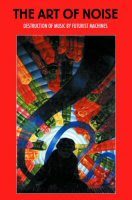
Music Book Review: The Art of Noise: Destruction of Music by Futurist Machines by Ferruccio Busoni and others

The Art of Noise: Destruction of Music by Futurist Machines
by Ferruccio Busoni and others (Music 780.904 Art)

When one thinks of early 20th century art movements, perhaps “I should look in the music library” isn’t the first phrase that comes into your mind, but in fact these early art movements involved artists from all kinds of disciplines, including painting, sculpture, poetry, fiction, theater, and yes, music! And these early art movements — I’m thinking in particular of Futurism, Dada, and Surrealism — laid the groundwork for much of the art of the 20th Century, and continue to influence modern art and music today. The first of these movements was Futurism, which is officially noted as starting in 1909 in Italy with the publication of F. T. Marinetti’s Futurist Manifesto. The Futurists produced lots of manifestos, and many of them pertain specifically to music. I remember first coming across them in the early days of the public internet, around the mid-1990s, which seemed fitting considering the Futurists’ categorical embrace of evolving technology and the hustle and bustle of modern cities. And most of them pertaining to music have been gathered together in a book called The Art of Noise, which you can borrow from the Polley Music Library.


To begin, let’s address this book’s subtitle, which is “Destruction of Music by Futurist Machines.” That’s a pretty provocative title to get someone to open a book, isn’t it? I think that it may be overstating the case that one will find in these essays, and to be fair, this is one of those books that isn’t itself particularly scholarly in nature: it’s basically reprinting those same translations of the manifestos that have floated around the internet since its early days, along with an introduction by Danielle Lombardi that first appeared in Art Forum magazine. Outside of Lombardi’s introduction, you won’t really find any analysis of these manifestos and writings here, just the source documents themselves. But Lombardi’s article is a good choice for introducing new readers to the ideas found in Futurism, particularly in music. And one of the first observations that she makes addresses the subtitle of this book: while Futurists are often remembered as being pro-technology, pro-industrial age, celebrating machines and war and the rejection of tradition, the writings of their first major musical figure, Ferruccio Busoni, take a more moderate position that embraces both new and old ideas. In reality, much of the music of the Futurists continued to use traditional musical principles, while attempting to add new ideas, and brainstorm new possibilities. In this sense, the Futurists aren’t really that different from any other generations, with new ideas continuing to supplement the old.


In part, this misunderstanding is related to the tumultuous history of Italy in the early part of the 20th Century. While the Futurists got their start in 1909 (and perhaps a little earlier, considering some of Busoni’s writings dating back to 1906), Italy eventually turned to fascism after WWI, at which point much of the Futurist movement was suppressed publicly, replaced with nationalistic art much like what happened in Germany at the same time. Some of the Futurists, such as founder Marinetti, became fascists themselves, finding that some aspects of early Futurism like an admiration of war and the notion of establishing a new national identity translated well enough to the new regime. But most of the music written by futurists was lost, and only the manifestos, which had circulated around Europe in earlier years, survive. Even the legendary “intonarumori,” or “noise machines,” invented by Futurist musician Luigi Russolo around 1910, only survive in photos.


So what shall we make of these manifestos? One thing to bear in mind is that manifestos are historically done in a provocative style—their authors are generally compelled to write them to shake things up, socially, politically, artistically, or all of the above. But before anything gets shaken, you have to have readers! So some of the bravado and bluster of these writings can be taken with a grain of salt—on some level, they are attempting to capture readers and stimulate discussions, a more difficult feat back in the days before the internet, television, or even radio. The beginning of Francesco Pratella’s 1910 “Manifesto of Futurist Musicians” is a great example of this: his opening, “I appeal to the young,” is kind of the radio DJ “shock jock” rhetoric of over 100 years ago. He goes on to discuss what he feels is a kind of traditionalist mediocrity in Italian music of the era, comparing Italy’s scene to composers from various other countries (whom he amusingly praises and criticizes simultaneously). Like many manifestos, he eventually reaches a list of demands, such as abandoning the universities and conservatories, ignoring the music press, stepping away from music competitions, and “the liberation of individual musical sensibility from all imitation or influence of the past, feeling and singing with the spirit open to the future, drawing inspiration and aesthetics from nature, through all the human and extra-human phenomena present in it.” Regarding the latter, I find this both inspirational and naïve: obviously most music and art over time have taken inspiration from nature and humankind, so it’s a little silly to act as though rejecting all previous traditions will somehow land one in a new place. But he has some other interesting and more specific ideas that continued to resonate over time, such as “the reign of the singer must end,” a notion that no doubt influenced some of the intense symphonic writing of the early 20th C. from many composers.


Just a year later, Pratella’s “Technical Manifesto of Futurist Music” opens with a much softer and historically realistic observation, simply that “All innovators have logically been Futurists in relation to their time.” Indeed! There’s no such thing as a totally new haircut, for example. What follows are some specific musical areas of inquiry that are indeed very forward-thinking for their time, such as considering the “chromatic atonal mode” for composing, an idea that had just begun to be spread elsewhere with Schoenberg’s earliest 12-tone pieces dating around 1908. He goes on to suggest looking into microtones, divisions of the octave even smaller than half-steps. He proposes similar investigation into more complex deployment of rhythms in music, and tempos that shift frequently. Just a couple years later in 1912, he writes again with more detail regarding rhythmic variation in music with his article “The Destruction of Quadrature,” which proposes different ways of perceiving and notating rhythmic groups that can take into account simultaneously-occurring rhythmic pulses, polyrhythms that can shift like the internal rhythms of free verse.


Busoni and Pratella may have been the foundational musical thinkers in the Futurist movement, but the most famous is likely Luigi Russolo, for his intonarumori machines mentioned above, and his manifesto describing their necessity and use, which was called “The Art of Noises” and published in 1913. Starting around this point we get to my favorite parts of this book, which place the work of the Futurists in a more purely creative, out-of-the-box, sometimes even childlike light. “The Art of Noises” started life as a letter from Russolo to Pratella, proposing that a family of “noises” could be incorporated into music, reflecting both sounds from the natural world and new sounds emanating from the hustle and bustle of then-modern cities. Russolo came up with six “families” or groupings of noises that could be conceptualized in a manner similar to the sections within an orchestra, and composed for them using a variety of instrumentation including his new “noise machines.” Russolo sent his letter to Pratella in March of 1913, and by June of that year, Russolo wrote an article documenting a June 2 performance that featured these new machines and ideas. There were machines produced for a variety of noises: the “Roarer,” “Thunderer,” “Burster,” Bubbler,” and so on. As mentioned earlier, sadly these instruments were lost over time, but we still have a written score for “Awakening of a City,” one of Russolo’s pieces that would have used these machines, featuring its own unique kind of graphic notation. Even without hearing much of these instruments in action—only a tiny fragment of recorded sound from the original machines survived—the ideas behind these sounds have been influential throughout the last century. Works by contemporaries like Arthur Honegger were influenced by Futurist ideas, as well as post WWII composers like John Cage, and within pop music idioms, industrial music and noise music in particular have embraced the Art of Noises in many different ways. There’s even the pop band who took their name from this document!


The remainder of this book falls into an “appendix” section, though the material is still very much related. Busoni’s 1906 article “Sketch for a New Aesthetic of Sound Art” is another spirited investigation that looks at the fundamentals of sound and proposes various new ways to expand musical resources. Just a few years before Futurism became an official movement, Busoni was already considering the primal implications of music’s emotional impact, questioning if present-day instruments and notation systems were capable of expressing the full range of these potential emotions, and proposing several ways to expand the possibilities: He proposed a system of third-tones that could further parse the octave even more than half-steps. He proposed several new ways to conceptualize harmony, including largely abandoning it altogether. And he continued to try to link these ideas to tangible emotional expression, which strikes me as an interesting contrast to the fairly intellectual manner in which serialism in music ultimately developed over subsequent decades.


Bruno Corra’s article about “chromatic music” is here, too, and it’s a fascinating piece from 1912 that is truly looking at the “chroma,” or “color” relationships that one could potentially establish between music and color. It documents a two-year project attempting to find useful, consistent connections between color and pitch, or music and light, dividing colors across pitches, and different hues of colors in different octaves. Futurist painter Carlo Carra’s essay closes out the book on a related note: writing more from a visual artist’s perspective, he challenges the reader to consider “The Painting of Sounds, Noises and Smells.”


All told, it feels like these writings, and those of the Dada movement that followed soon after, led the world to consider art from exciting new perspectives that many contemporary artists still engage with every day. Reading these pieces, and discovering some of the first times that these ideas were expressed during the beginnings of modernism, can be inspiring, and cause one to think about their own interactions with music, either as music makers or listeners, from new angles.


(If you enjoy this, you may also wish to try The Music of Dada by Peter Dayan.)

Recommended by Scott S.
Polley Music Library

Have you read or listened to this one? What did you think? Did you find this review helpful?

New reviews appear every month on the Staff Recommendations page of the BookGuide website. You can visit that page to see them all, or watch them appear here in the BookGuide Blog individually over the course of the entire month. Click the tag for the reviewer's name to see more of this reviewer’s recommendations!


Check out this, and all the other great music resources, at the Polley Music Library, located on the 2nd floor of the Bennett Martin Public Library at 14th & "N" St. in downtown Lincoln. You'll find biographies of musicians, books about music history, instructional books, sheet music, CDs, music-related magazines, and much more. Also check out Polley Music Library Picks, the Polley Music Library's e-mail newsletter, and follow them on Facebook!

Friday, February 23, 2024

Music Book Review: Schoenberg - Why He Matters by Harvey Sachs

Schoenberg: Why He Matters
by Harvey Sachs (Music 780.92 Sch)

There have been a series of books about pop artists lately that include something about them “mattering” in the title. We have a couple of them: Why Sinead O’Connor Matters, Why Patti Smith Matters, and Why Bushwick Bill Matters come to mind. But I never expected to see one about one of the most well-known composers of the 20th Century. That’s why I was a little amused to see the title of Harvey Sachs’ latest book, Schoenberg: Why He Matters. It addresses some serious questions about the Schoenberg legacy, though, and I think it’s an important book, which you can borrow from the Polley Music Library.


Sachs lays out the meaning of his title, and the necessity for the book, in his prologue. Although Schoenberg is remembered for being a very influential composer, his music is rarely played today. The 12-tone system of music that he is most known for was interesting and influential in its time, but today it is almost never used, and the atonality it produces is largely out of style again in a general sense, much less by way of Schoenberg’s formal considerations. Sachs also discusses his choice to proceed with this book in as non-technical a manner as possible. This isn’t a book that will require readers to understand music theory and follow formal analysis of 12-tone pieces, perhaps a first for writing about the composer. I found this refreshing: this is a body of work that has mostly been set aside for its reputation as being technical in nature and wholly dissonant in its approach, but I must admit that I have long been an enthusiast of Schoenberg’s music, and what I find to be most notable in his best works is a tremendous feeling for melody. His posthumous reputation stands somewhat at odds with the sound of his actual music, in my opinion. Perhaps this is the only kind of approach to a book about the composer and his music that can realistically help to correct that record.


It’s an unusual book. For the most part, Sachs has written a traditional biography here, following Schoenberg’s life chronologically. However, when he traverses into the more “controversial” periods of Schoenberg’s music, all surrounding his gradual shift toward atonality and the 12-tone technique, he pauses for moments of layperson musical analysis and also focuses on the social and interpersonal implications of the pieces, their performances, and their early reception by audiences. The musical analysis tends to be easy to follow, and often focuses on elements of performance practice around this music that have frequently conspired to obscure Schoenberg’s musical intentions.


What are these intentions? Reading between the lines here, I really see them as having a very advanced and moving knack for melody, and for writing the kinds of textures beneath melodies that can really highlight their sometimes unusual, fragile natures. As Sachs proceeds through Schoenberg’s life and major works, I can’t help but to put together a bit of a secondary narrative around the music, some of which is explicit in the text, but some of which is more implicit once one starts to think about the musical evolution that happened over Schoenberg’s lifetime. His early works were still very much rooted in German Romanticism, which despite its increased reliance on chromaticism, was still a solidly tonal form of writing. The early works were often larger in scale, too, such as the tone poem “Pelleas and Melisande.” The transitional pieces like his celebrated “Pierrot Lunaire” are a kind of free atonality, and generally written for small ensembles. The lightness of orchestration often helps to clarify his emphasis on melody to my way of listening — check out his string quartets for a great example of this in action that you can compare across his long career, too. We finally arrive at the 12-tone period, from 1921 onward, where again the most representative pieces tend to be for smaller chamber ensembles or for the piano, and though there is a somewhat more strict kind of atonality — Schoenberg really strives to obscure any kind of tonal gravity taking form — the pieces are still somewhat free, too. 12-tone or “serial” composers, at least among this first generation, weren’t so strict as some of their successors like Babbit or Stockhausen.


Yes, Schoenberg and some of his contemporaries like Berg and Webern were looking for new kinds of sounds not so grounded in tonality, but this isn’t noise music. Harmonic function may be blurred beyond recognition, but in its wake, the gravitas of melody seems to take on an even deeper role. One problematic area, though, is that musicians simply aren’t trained to play atonally — the exercises and other music played over time all reinforce tonal performance habits. This means that in performance, musicians often find these pieces more difficult than other repertoire, and as a result many performances take place at slower tempos than Schoenberg intended. Sachs makes reference to this phenomenon several times throughout the book, and each time there is a detrimental effect on the feeling of the piece, the grace of the melodies. For example, in reference to Schoenberg’s Minuet from the ”Serenade,” Sachs notes that performances all take place around 20 bpm slower than specified in the music, “And this eliminated not only the ‘singing’ quality that the composer specifically requested but also the whole notion of the minuet as a dance: at too slow a tempo, the music plods, beat by beat.” Much of the misunderstanding of this music, then, may be related to performances that simply don’t match the musical intention. Where Schoenberg aimed for light, airy textures, we often hear these plodding performances.


Sachs does a great job of humanizing the composer as well. His long-term frenemy relationship with Stravinsky, for example, makes occasional appearances in the book, as well as Schoenberg’s occasionally prickly opinions about other composers as well. His complicated relationship with his Jewish background and Christian faith are explored, as well as his struggles with anti-Semitism and difficult audiences in his native Vienna. His economic difficulties later in life are discussed. He lived a deeply fascinating life, and knowing more about it will hopefully compel some readers to give his music another listen, too.


(If you enjoy this, you may also wish to try Schoenberg and his World by Walter Frisch or Arnold Schoenberg by Bojan Bujić.)


( Wikipedia page about Arnold Schoenberg ) | ( official Harvey Sachs web site )


Recommended by Scott S.
Polley Music Library

Have you read or listened to this one? What did you think? Did you find this review helpful?

New reviews appear every month on the Staff Recommendations page of the BookGuide website. You can visit that page to see them all, or watch them appear here in the BookGuide Blog individually over the course of the entire month. Click the tag for the reviewer's name to see more of this reviewer’s recommendations!


Check out this, and all the other great music resources, at the Polley Music Library, located on the 2nd floor of the Bennett Martin Public Library at 14th & "N" St. in downtown Lincoln. You'll find biographies of musicians, books about music history, instructional books, sheet music, CDs, music-related magazines, and much more. Also check out Polley Music Library Picks, the Polley Music Library's e-mail newsletter, and follow them on Facebook!