
Showing posts with label classical music. Show all posts

Friday, February 23, 2024

Music Book Review: Schoenberg - Why He Matters by Harvey Sachs

Schoenberg: Why He Matters
by Harvey Sachs (Music 780.92 Sch)

There have been a series of books about pop artists lately that include something about them “mattering” in the title. We have a couple of them: Why Sinead O’Connor Matters, Why Patti Smith Matters, and Why Bushwick Bill Matters come to mind. But I never expected to see one about one of the most well-known composers of the 20th Century. That’s why I was a little amused to see the title of Harvey Sachs’ latest book, Schoenberg: Why He Matters. It addresses some serious questions about the Schoenberg legacy, though, and I think it’s an important book, which you can borrow from the Polley Music Library.


Sachs lays out the meaning of his title, and the necessity for the book, in his prologue. Although Schoenberg is remembered for being a very influential composer, his music is rarely played today. The 12-tone system of music that he is most known for was interesting and influential in its time, but today it is almost never used, and the atonality it produces is largely out of style again in a general sense, much less by way of Schoenberg’s formal considerations. Sachs also discusses his choice to proceed with this book in as non-technical a manner as possible. This isn’t a book that will require readers to understand music theory and follow formal analysis of 12-tone pieces, perhaps a first for writing about the composer. I found this refreshing: this is a body of work that has mostly been set aside for its reputation as being technical in nature and wholly dissonant in its approach, but I must admit that I have long been an enthusiast of Schoenberg’s music, and what I find to be most notable in his best works is a tremendous feeling for melody. His posthumous reputation stands somewhat at odds with the sound of his actual music, in my opinion. Perhaps this is the only kind of approach to a book about the composer and his music that can realistically help to correct that record.


It’s an unusual book. For the most part, Sachs has written a traditional biography here, following Schoenberg’s life chronologically. However, when he traverses into the more “controversial” periods of Schoenberg’s music, all surrounding his gradual shift toward atonality and the 12-tone technique, he pauses for moments of layperson musical analysis and also focuses on the social and interpersonal implications of the pieces, their performances, and their early reception by audiences. The musical analysis tends to be easy to follow, and often focuses on elements of performance practice around this music that have frequently conspired to obscure Schoenberg’s musical intentions.


What are these intentions? Reading between the lines here, I really see them as having a very advanced and moving knack for melody, and for writing the kinds of textures beneath melodies that can really highlight their sometimes unusual, fragile natures. As Sachs proceeds through Schoenberg’s life and major works, I can’t help but to put together a bit of a secondary narrative around the music, some of which is explicit in the text, but some of which is more implicit once one starts to think about the musical evolution that happened over Schoenberg’s lifetime. His early works were still very much rooted in German Romanticism, which despite its increased reliance on chromaticism, was still a solidly tonal form of writing. The early works were often larger in scale, too, such as the tone poem “Pelleas and Melisande.” The transitional pieces like his celebrated “Pierrot Lunaire” are a kind of free atonality, and generally written for small ensembles. The lightness of orchestration often helps to clarify his emphasis on melody to my way of listening — check out his string quartets for a great example of this in action that you can compare across his long career, too. We finally arrive at the 12-tone period, from 1921 onward, where again the most representative pieces tend to be for smaller chamber ensembles or for the piano, and though there is a somewhat more strict kind of atonality — Schoenberg really strives to obscure any kind of tonal gravity taking form — the pieces are still somewhat free, too. 12-tone or “serial” composers, at least among this first generation, weren’t so strict as some of their successors like Babbit or Stockhausen.


Yes, Schoenberg and some of his contemporaries like Berg and Webern were looking for new kinds of sounds not so grounded in tonality, but this isn’t noise music. Harmonic function may be blurred beyond recognition, but in its wake, the gravitas of melody seems to take on an even deeper role. One problematic area, though, is that musicians simply aren’t trained to play atonally — the exercises and other music played over time all reinforce tonal performance habits. This means that in performance, musicians often find these pieces more difficult than other repertoire, and as a result many performances take place at slower tempos than Schoenberg intended. Sachs makes reference to this phenomenon several times throughout the book, and each time there is a detrimental effect on the feeling of the piece, the grace of the melodies. For example, in reference to Schoenberg’s Minuet from the ”Serenade,” Sachs notes that performances all take place around 20 bpm slower than specified in the music, “And this eliminated not only the ‘singing’ quality that the composer specifically requested but also the whole notion of the minuet as a dance: at too slow a tempo, the music plods, beat by beat.” Much of the misunderstanding of this music, then, may be related to performances that simply don’t match the musical intention. Where Schoenberg aimed for light, airy textures, we often hear these plodding performances.


Sachs does a great job of humanizing the composer as well. His long-term frenemy relationship with Stravinsky, for example, makes occasional appearances in the book, as well as Schoenberg’s occasionally prickly opinions about other composers as well. His complicated relationship with his Jewish background and Christian faith are explored, as well as his struggles with anti-Semitism and difficult audiences in his native Vienna. His economic difficulties later in life are discussed. He lived a deeply fascinating life, and knowing more about it will hopefully compel some readers to give his music another listen, too.


(If you enjoy this, you may also wish to try Schoenberg and his World by Walter Frisch or Arnold Schoenberg by Bojan Bujić.)


( Wikipedia page about Arnold Schoenberg ) | ( official Harvey Sachs web site )


Recommended by Scott S.
Polley Music Library

Have you read or listened to this one? What did you think? Did you find this review helpful?

New reviews appear every month on the Staff Recommendations page of the BookGuide website. You can visit that page to see them all, or watch them appear here in the BookGuide Blog individually over the course of the entire month. Click the tag for the reviewer's name to see more of this reviewer’s recommendations!


Check out this, and all the other great music resources, at the Polley Music Library, located on the 2nd floor of the Bennett Martin Public Library at 14th & "N" St. in downtown Lincoln. You'll find biographies of musicians, books about music history, instructional books, sheet music, CDs, music-related magazines, and much more. Also check out Polley Music Library Picks, the Polley Music Library's e-mail newsletter, and follow them on Facebook!

Sunday, February 4, 2024

R.I.P. Peter Schickele (1935-2024) -- Creator of P.D.Q. Bach


R.I.P. Peter Schickele (1935-2024) — creator of P.D.Q. Bach

With the passing of classical composer and humorist, Johann Peter Schickele (known commonly as Peter Schickele) on January 16, 2024, I’ve found myself revisiting his creative output in my own personal book and CD collection, and the albums available through the libraries, both in CD and in the Hoopla streaming music app. Though he was an accomplished composer of both classical and modern works, Schickele will forever be remembered for his comedic creation — P.D.Q. Bach, the 21st of Johann Sebastian Bach’s 20 children. Schickele introduced his satirical brainchild, P.D.Q. Bach, to both the music and humor worlds in 1965, via the album An Evening With P.D.Q. Bach, and eventually went on to release around 20 albums featuring P.D.Q. Bach’s works (a few were retrospective collections or “greatest hits”). Music fans took the P.D.Q. Bach albums very seriously — Schickele not only brought both a sense of madcap, slapstick comedy and sharp, carefully thought-out parody, but he also injected the compositions with elements of both Classical and Baroque music. Schickele made use of less-common existing instruments (slide whistle, bagpipes, and kazoo, among them), but he also invented various musical instruments, either out of commonplace items found around the house (the “pastaphone”, made with uncooked manicotti), or by combining parts from two or more previously uncombined instruments, such as the Tromboon (a combination of trombone and bassoon). Even the titles of P.D.Q. Bach compositions show Schickele’s absurdist sense of humor: Concerto for Horn and Hardart, Pervertimento for Bicycle, Bagpipes and Balloons, The Stoned Guest, Hansel & Gretel & Ted & Alice, A Concerto for Bassoon v. Orchestra, Grand Serenade for an Awful Lot of Winds and Percussion (I remember playing this one for my final senior concert in high school — at one point, most of the orchestra is “performing” by gargling glasses of water!), Iphegenia in Brooklyn, The Seasonings, Toot Suite, Schleptet in E flat major and A Fanfare for the Common Cold. My late father introduced me to Schickele and P.D.Q. with the album P.D.Q. Bach on the Air, one track of which features a sports color commentating team giving play by play on a performance of Beethoven’s Ninth Symphony…still one of the funniest things I’ve ever listened to!


Schickele frequently appeared in character as “Professor Peter Schickele,” from the University of Southern North Dakota at Hoople, the world’s only expert researcher into the life of P.D.Q. Bach, and served as conductor for many orchestra concert performances of his works around the world. In the guise of the Professor, he would arrive late to the stage, his shirt partially un-tucked and his hair windblown and out of control. Often, he would run in from the back of the auditorium, or slide down a rope from the rafters above the stage, or wing in on a rope from the balcony. He would breathlessly share his oddball knowledge of the oddball composer, and his conducting of the orchestra would often go out of control (with humorous intent). Schickele occasionally appeared in costume as P.D.Q. Bach himself (it is his image on various album covers). Schickele wrote a book about P.D.Q. Bach, The Definitive Biography of P.D.Q. Bach, 1807-1742? (published in 1976), in which he artfully mixes satire and seriousness.

Schickele composed the instrumental score for the ecological science fiction film Silent Running (1972), including two original songs sung by Joan Baez. He also created the soundtrack, and narrated the tale, for a 1973 animated version of Where the Wild Things Are, from Maurice Sendak’s classic children’s picture book. In the 1990s and early 2000s, his “Schickele Mix” appeared on public radio stations across the country (as both first-run episodes through 1999 and then in repeat rotation) — in which he provided an education in classic music to listeners. Although he composed over 100 works for classical orchestras, choral groups, chamber ensembles and more — it is for his invention of a crazed classical music composer that he will most fondly be remembered by most of his fans, including me. If you’ve never experienced the mix of serious musicology and absurd satire, you’ve simply got to try one of the P.D.Q. Back titles in the list below from the Lincoln City Libraries. Personally, I highly recommend the album P.D.Q. Bach on the Air, although you’ll have to use the libraries’ InterLibrary Loan service to track that one down!

( official Peter Schickele/P.D.Q. Bach web site )

Recommended by Scott C.

Bennett Martin Public Library — Public Service

Friday, January 14, 2022

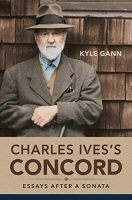
Music Book Review: Charles Ives's Concord: Essays After a Sonata by Kyle Gann

Charles Ives’s Concord: Essays After a Sonata

by Kyle Gann (Music 780.92 Ive)


2021 was the one of a few years that could be considered the centennial of Charles Ives’ Concord Sonata. The truth of this well-known piece is more complicated than most, as Ives revised it many times. The Concord Sonata is fascinating for many reasons, but I think it’s particularly notable in 20th century music in that it’s one of the most atonal pieces that is fairly well-received universally, even by audiences that don’t usually warm up to such music. I think one of the main reasons for that is that it’s somewhat “programmatic” music, rather than “absolute”: that is, each of its movements make reference to figures in the transcendentalist movement, and listeners can calibrate what they’re hearing through that kind of interpretive filter. That frame of reference, plus the notion that Ives distributed a sort of book with the early editions of the piece entitled “Essays Before a Sonata,” gave listeners some extramusical considerations to grasp onto while appreciating the music.


We have a great book that attempts to unravel the many mysteries of Ives’s Piano Sonata No. 2, more commonly known as the Concord Sonata, that you can borrow from Polley. It’s called Charles Ives’s Concord: Essays After a Sonata by composer and long-time music journalist Kyle Gann, and you’ll learn more about both this piece and Ives more generally than you ever thought possible in these pages. I should start off with a bit of a caveat, though: this is the kind of book that you’ll get the maximum benefit from if you read music notation. There’s a lot of material here that you’ll be able to get through just fine if you don’t, but Gann attempts to untangle the complexities of this this piece from both historical and musical perspectives. That means there are sections of more formal musical analysis sprinkled throughout the book.


That issue aside, and I’m guessing that there’s probably a pretty significant overlap between music readers and Ives fans, anyway, this book is just a phenomenally deep take on the Concord Sonata. The first chapter, although relatively brief, lays out more than I’ve ever seen elsewhere about the origins of the piece, and Ives’ stature around that time of his life. I imagine many of us have heard tall tales around Ives, this notion of a person who led a very serious kind of double life as an insurance salesman by day and composer by night, approaching music in totally unique ways that most of the world didn’t even begin to catch up to until the 1960s, and toiling away at this music that remained mostly unknown and unplayed. It turns out that while elements of that picture are accurate, some of the details might change the way you conceptualize where he was coming from. Take his job as an insurance salesman, for example: I guess in my mind I had always pictured that meaning that he’s a kind of blue collar worker, low on the corporate totem pole, and I don’t recall going over any details to the contrary in music school. In reality, Gann points out that “By 1921, he was quite a wealthy businessman, in the top 1 percent by fortune.” It’s quite true that only a few people knew that he spent all of his spare time composing music, though. But his wealth and status in the insurance industry certainly explains how he was able to self-publish many of his works, and mail them out to people who he thought might be interested in them.


The Concord Sonata was one such piece. Gann reports that there is evidence of him starting to work on it dating back to 1911, starting to perform parts of it for people by 1915, and in 1919, he had prepared a version of the piece that he paid music publisher G. Shirmer to print 750 copies of. He additionally printed an accompanying set of essays, called “Essays Before a Sonata,” and in 1921, he mailed hundreds of copies of the piece to a list of music-related figures whom he thought might be able to further advance his work. It’s worth noting that he underwent a similar self-publishing and mailing campaign in 1922 for his “114 Songs.” He chose his recipients of these materials from a subscription list for the Musical Courier and Who’s Who in America. He found few sympathetic recipients this way, though the piece did find its way to several pianists who played portions of the Sonata publicly as early as 1921 and a full performance around 1927. Then Ives continued to revise the piece in the ensuing decades, publishing what’s now considered to be a more definitive version in 1947.


The next chapter is devoted to Ives’ Essays Before a Sonata, in which Gann immediately challenges another commonly-held assumption about the written work accompanying the music. It’s often been said that Ives was somewhat careless with the quotations he leverages throughout his essays to make his points, but Gann has found that his quotations are in fact quite accurate. He includes an appendix that further delineates this issue. The main focus of the chapter, however, is simply reflecting on how novel it was for Ives to create this kind of preparatory literary work for his music, and how unusual it was at the time for programmatic instrumental music of this kind to be made.


These chapters are brief but very informative, and then the bulk of the book is spent approaching the Concord Sonata musically from a few different angles: movement by movement, across the whole piece, and looking into how some material appeared in other Ives compositions. Again, music readers will get the maximum benefit out of this analysis, but I would still encourage you to read on if you’re interested in Ives. Each movement of the Concord is considered from so many perspectives, including Ives’ essays about the piece, that you’ll still find a lot of revealing insights here. And in these sections, you’ll find all kinds of fascinating approaches Ives used that were quite unusual for their time. For example, even from the beginning of the piece, the main theme of the Sonata, often referred to as the “Human Faith” theme, is obscured, coming into focus later. Ives has noted that he wanted themes to coalesce out of their own development, rather than the more traditional method of stating them first and then having variations spin off. Then Ives draws from his set of idiosyncratic approaches, using things like bi-tonality, quotations from other familiar classical and folk music pieces, and occasionally implementing things that are now called “extended technique,” like using a board on the piano keys to perform large clusters of notes.


Most of the analysis is done using the 1947 version of the Concord. Toward the end, Gann does a brief comparison of some of the differences between the earlier version printed in 1920 and the 1947 edition. It’s remarkable that Ives continued to refine this piece for so much of his life. Clearly it was of deep significance to him, and even though he ceased to write new music in 1927, he devoted a lot of time to making the Concord the best it could be.


(If you enjoy this, you may also wish to try Charles Ives and His World by Peter J. Burkholder or Charles Ives: A Life With Music by Jan Swafford.)


( official Jan Swafford web site )


Recommended by Scott S.
Polley Music Library


Have you read or listened to this one? What did you think? Did you find this review helpful?


New reviews appear every month on the Staff Recommendations page of the BookGuide website. You can visit that page to see them all, or watch them appear here in the BookGuide Blog individually over the course of the entire month. Click the tag for the reviewer's name to see more of this reviewer’s recommendations!


Check out this, and all the other great music resources, at the Polley Music Library, located on the 2nd floor of the Bennett Martin Public Library at 14th & "N" St. in downtown Lincoln. You'll find biographies of musicians, books about music history, instructional books, sheet music, CDs, music-related magazines, and much more. Also check out Polley Music Library Picks, the Polley Music Library's e-mail newsletter, and follow them on Facebook!


Friday, August 6, 2021

Music Review: Summon the Heroes by John Williams and the Boston Symphony Orchestra (on CD)

Summon the Heroes
by John Williams and the Boston Symphony Orchestra (Compact Disc 781.68 Bos)

As I write this review, we are about halfway through the Tokyo Summer Olympics of 2021 (postponed from 2020 by the global pandemic). Ever since 1996, one of my every-other-year traditions during both the Summer Olympics and the Winter Olympics is to listen to this album on auto-replay for two straight weeks as the sporting events take place.


Summon the Heroes is both the album title and the title of the first track — which in 1996 was a newly created work by composer/conductor John Williams (yes, he of the many Oscar-winning soundtracks), in honor of the Centennial Celebration of the Modern Olympic Games in Atlanta, GA in July of that year. Overall, the disc contains twelve tracks, three of which are Williams’ music. Track three opens with Leo Arnaud’s “Bugler’s Dream”, which leads immediately into “Olympic Fanfare and Theme”, written by Williams for the 1984 Los Angeles Summer Games. And track #1 is “The Olympic Spirit”, a piece composed by Williams for the NBC Sports Division, in celebration of the 1988 Summer Olympics in Seoul, South Korea. All three of Williams’ pieces feature a wide range of musical stylings, from challenging brasses and pulse-pounding percussion, to pensive woodwinds and striving strings — there’s a little thing in there for all types of athletic experience, from individuals struggling to complete a marathon, and gymnasts flying through the air like birds, to driving beats symbolizing the charge of the speed swimmer or the compulsive excitement of men and women testing the boundaries of human strength and endurance.


Admittedly, those are the three tracks I gravitate towards most often, considering that they are still heavily sampled for use in NBC’s ongoing Olympics television and streaming coverage of the games. But the disc does include 9 other tracks of music, some written specifically for the Olympics, and some just thematically appropriate: “O Fortuna” by Carl Orff; “Ode to Zeus” from Canto Olympico (for the 1992 games in Barcelona” by Mikis Theodorakis; “Javelin” by Michael Torke, written for the 1996 Atlanta games; “Olympic Theme” by Leonard Bernstein, written for the 1981 International Olympic Congress; “Festive Overture, Op. 96” by Dmitri Shostakovich, theme of the 1980 Moscow summer games, “Conquest of Paradise” by Vangelis; “Parade of the Charioteers from Ben Hur” by Miklos Rozsa; “Toward a New Life” by Josef Suk, Silver medal-winning composition at the 1932 Olympic Games in Los Angeles, and “Chariots of Fire (Theme)”, also by Vangelis, written for the 1981 film but also performed at the 1984 Winter Games in Sarajevo. I find most of these non-Williams’ tracks to be more about the fanfare and pageantry of the Games, and less about the experiences of the athletes themselves.


None-the-less, each of these pieces, in their own way, is inspirational and celebrational. But the three Williams tracks, clocking in at around 14 1/2 minutes total, get my pulse racing and put me in the mood to see the world’s greatest athletes pushing their limits. Of the hundreds of CDs (and digital albums) I own, I’ve probably listened to Summon the Heroes more often than any other…and it never fails to lift me up, no matter what mood I’m in!

[Note: Williams also composed yet another piece of Olympics music — “Call of the Champions” — for the 2002 Winter Olympics, after this 1996 album was released. I wish it was also on this disc!]

[If you enjoy this, I’d suggest listening to other John Williams works. But his soundtracks, tremendous though they are, are very much tied in to the films they were written for. The works he created for the Olympics seem to stand out as an entirely different field of music.]

[ Wikipedia page for John Williams (he doesn’t have an official website) ]


See the new Summer Olympics Reading List on BookGuide!


Recommended by Scott C.
Bennett Martin Public Library — Public Services


Have you listened to this one? What did you think? Did you find this review helpful?


New reviews appear every month on the Staff Recommendations page of the BookGuide website. You can visit that page to see them all, or watch them appear here in the BookGuide Blog individually over the course of the entire month. Click the tag for the reviewer's name to see more of this reviewer’s recommendations!

Friday, June 25, 2021

Music Book Review: A Sound Mind by Paul Morley

A Sound Mind: How I Fell in Love With Classical Music (and Decided to Rewrite Its Entire History)

by Paul Morley (Music 781.68 Mar)


Author Paul Morley is no stranger to writing about music. He’s been a music journalist for 40 years, mostly focusing on pop and rock music, and he’s written several books about bands such as Joy Division and David Bowie. He was also one of the founding members of the early digital sampling pioneers The Art of Noise, and is said to have helped with early publicity for the band Frankie Goes to Hollywood.


Until now, though, Morley was only known for his pop criticism. Then technology changed, streaming music became possible, and he found himself expanding his horizons into jazz and classical music, at first during travel downtimes. As his musical horizons became more inclusive, he also became philosophical about the era of his youth, the “album era,” and how short-lived it might be compared to other ways of consuming and thinking about music. Before you know it, he was headlong into classical music, and he shares his new journey with us in his latest book, A Sound Mind.


Morley’s style is one of the most appealing things about this book — he does check some boxes for music history and biographical information throughout the book, but fundamentally this works as a memoir that happens to document his own investigation into classical music. He’s worked successfully with this kind of approach before in his 2000 book “Nothing,” which reflected on his own childhood and the suicide of his father while considering the work of Ian Curtis (Joy Division), Elvis, and Marc Bolan. Where that book focuses on the darker side of life and missed opportunities, though, this book seizes the moment and finds new life in the embrace of centuries of music that might have been overlooked by many of us surrounded by contemporary rock and pop records.


One of my favorite things about this book is how capably Morley weaves modern and older classical traditions together. He’s discovering and enjoying this music in a modern, hyperlinked kind of way, so he looks for asynchronous associations that many of us who have studied all of these works chronologically might not have considered before. These movements through time are beautifully depicted in playlists that periodically illustrate points throughout the book. Moving at one point between Bach, Steve Reich, Beethoven, George Crumb, Kraftwerk, Keith Jarrett, and Thomas Arne, for example, turns out to be an incredible experience. This book proves to be a great introduction to classical music, and a breath of fresh air for those of us already on the inside.

[If you enjoy this, you may also wish to try RIYL: Mozart in the Jungle: Sex, Drugs and Classical Music by Blair Tindall, or Year of Wonder: Classical Music to Enjoy Day by Day by Clemency Burton-Hill.]

[ publisher’s official A Sound Mind web page ]


Recommended by Scott S.
Polley Music Library


Have you read or listened to this one? What did you think? Did you find this review helpful?


New reviews appear every month on the Staff Recommendations page of the BookGuide website. You can visit that page to see them all, or watch them appear here in the BookGuide Blog individually over the course of the entire month. Click the tag for the reviewer's name to see more of this reviewer’s recommendations!


Check out this, and all the other great music resources, at the Polley Music Library, located on the 2nd floor of the Bennett Martin Public Library at 14th & "N" St. in downtown Lincoln. You'll find biographies of musicians, books about music history, instructional books, sheet music, CDs, music-related magazines, and much more. Also check out Polley Music Library Picks, the Polley Music Library's e-mail newsletter, and follow them on Facebook!

Friday, April 9, 2021

Music Book Review: Stravinsky: The Rite of Spring by Peter Hill

Stravinsky: The Rite of Spring
by Peter Hill (Music 784.18 Str)

Spring has sprung, and I often think of Stravinsky’s “Rite of Spring” around this time of year. Just as spring is a time for new growth, Stravinsky’s “Rite of Spring” seems in retrospect to be a signpost in music history, heralding the age of Modernism for the concert-going public. And like a spring storm, things got off to a rough start: there was a bit of a riot at the debut performance of the piece.


To be fair, Schoenberg and his circle beat Stravinsky to the concert-as-riot routine by a few months. The now-infamous “Skandalkonzert” took place in Vienna on March 31, 1913, featuring performances of pieces by Schoenberg, Webern, Berg, and Zemlinsky. Mahler’s “Kindertotenlieder” was also on the bill, but fights broke out within the audience during the performance of Berg’s “Five Orchestral Songs,” and the show ended prematurely. The Berg pieces weren’t performed again publicly until 1952, incredibly enough.


But the riot at the debut of Stravinsky’s Rite of Spring on May 29, 1913 developed a legendary reputation all its own. This was his third ballet commission, following The Firebird and Petroushka, and it’s likely that the audience was just as taken aback by Nijinsky’s choreography for the dancers as they were by the unique modern sounds of the music. There was laughter and shouting coming from the audience throughout the first performance. Some accounts of this performance have been embellished over time, and perhaps led certain expectations at avant-garde performances of the era. I immediately think of the Dada artists during their formative period, working out of the Cabaret Voltaire in Zurich. Dada (anti-) founder Tristan Tzara pushed a large audience of around 1000 to their limits in April of 1919, purposely antagonizing them toward rioting and destruction, which Tzara considered a smashing success, pardon the pun, as it transformed the audience from being mere onlookers to being active participants.


The legend around the debut performance of the Rite of Spring still looms large, but the real story of the piece is one of adoration. Even most folks at the time of the piece’s debut felt this way: it’s not as widely discussed, but there were five more performances of the work in its first month, and the rest were very well received. No riots on those nights. And it’s gone on to be a much beloved piece, sometimes referred to as the most loved or at least most well-known piece of 20th Century classical music.


Here in Polley, we have a book called “Stravinsky: the rite of spring” by Peter Hill, and it’s a great introduction to the piece from conception to its place in modern concert and recording repertoire today. This is a book that you’ll get maximum benefit from if you read music, but there’s still lots of useful and fascinating information for those who don’t. For example, one of the early chapters is called “Sketches,” and explores the handwritten sketches Stravinsky made toward the Rite of Spring between 1911 and 1913. There’s some great musical analysis here of how the piece gradually took shape from the dated sketches, but you can follow a lot of this by simply reading and listening, as Hill makes references to familiar parts of the final version. This is followed by a chapter on the earliest performances of the piece and reactions to it, including informal performances at the piano by Stravinsky, again at the piano in a 4-hand reduction played by Stravinsky and Debussy, at the rehearsals with the orchestra, the dress rehearsal, and that fabled first public performance itself.


Following chapters delve further into analyzing the structures and themes of the final piece, followed by a very cool section that highlights historical commentaries made about the Rite by various composers, musicians and critics. Here we find that the piece has been generally well received despite its difficulties, with comments ranging from around the time of its debut all the way to recollections from the late 1970s.


Final sections of the book cover the topics of how Stravinsky and Nijinsky collaborated on the choreography—or perhaps more to the point, how they didn’t, and how Stravinsky had some reservations about the initial staging of the piece—followed by some thoughtful comparisons between notable commercial recordings. Hill points out that The Rite of Spring happened to debut the same year as the first complete recording of a major symphony was made (Beethoven’s 5th), so it’s grown up alongside the recording industry. As one of the most frequently recorded pieces by orchestras wanting to strut their virtuosic stuff, there are lots of interesting tempo variations among respected recordings of the Rite—even those conducted by Stravinsky himself. Hill breaks down many of these differences, how they change the character and feel of the piece, and at times how Stravinsky himself reflected on the recordings.

[If you enjoy this, you may also wish to try Stravinsky: A Creative Spring: Russia and France, 1882-1934 and Stravinsky: The Second Exile: France and America, 1934-1971 both by Stephen Walsh.]

[ publisher’s official Stravinsky: The Rite of Spring web page ] | [ official Peter Hill web site ]


Recommended by Scott S.
Bennett Martin Public Library — Polley Music Library


Have you read or listened to this one? What did you think? Did you find this review helpful?

New reviews appear every month on the Staff Recommendations page of the BookGuide website. You can visit that page to see them all, or watch them appear here in the BookGuide Blog individually over the course of the entire month. Click the tag for the reviewer's name to see more of this reviewer’s recommendations!


Check out this, and all the other great music resources, at the Polley Music Library, located on the 2nd floor of the Bennett Martin Public Library at 14th & "N" St. in downtown Lincoln. You'll find biographies of musicians, books about music history, instructional books, sheet music, CDs, music-related magazines, and much more. Also check out Polley Music Library Picks, the Polley Music Library's e-mail newsletter, and follow them on Facebook!

Friday, February 26, 2021

Music Book Review: The Courage of Composers and the Tyranny of Taste: Reflections on New Music by Bálint András Varga

The Courage of Composers and the Tyranny of Taste: Reflections on New Music
by Bálint András Varga (Music 780.922 Var)

Contemporary classical music, often referred to as “New Music,” occupies a curious place in the modern world. The music continues to be studied and composed, but it often stays near the orbit of academia, not being performed as often as “the classics.” At times the music can be “difficult,” it is often said, and falls outside of the tastes of many concertgoers. But it goes on nonetheless, and from this listener’s perspective, there is a world of compelling, evocative music waiting to be found there.

Interviewer Bálint András Varga takes this set of circumstances as a starting point for interviews with 33 living contemporary composers, asking each of them a series of questions about how their creative practices intersect with the world of commercial necessities like concert halls and recordings. He focuses on the concept of “courage” to look at inwardly-focused creative pressures, and “the tyranny of taste” for insight on external pressures on the creative process. In the course of 33 interviews (mostly conducted via email), he receives 33 unique perspectives on how composers have faced these issues. Many notable living composers are included in the book, such as George Crumb, John Adams, Libby Larsen, and Christian Wolff. Varga follows the extensive composer interviews with two smaller sections that focus on music critics and festival directors.

Although Varga structured his book around an agenda—his framing questions around “courage” and “the tyranny of taste,” after all, invite a certain oppositional posture against the public at large—he ultimately lets the interviews go where they may, and the results show far more nuanced and complex relationships. Many of the composers he interviews reject his notion of “courage” outright, and quite a few take umbrage with his framing of the “tyranny of taste” dominating or otherwise hindering their creative lives. A majority of the interview subjects are international composers who reflect more on World War II or Cold War-era political strife affecting their work and lives than other externalities. While some composers answer Varga’s prompts in a manner that extends into lengthier conversational formats, most answer with a simple, direct paragraph or two, succinctly laying out their compositional intentions without getting particularly entangled in the prompts. Ultimately I think Varga fails to make his case for “courage” or “tyranny of taste,” but he captures some worthwhile insights into the featured composers’ approaches nonetheless.

[If you enjoy this, you may also wish to try Talking Music by William Duckworth, or Source: Music of the Avant Garde, 1966-1973, edited by Larry Austin and Douglas Kahn.]

[ profile of Balint Andras Varga at the time of his passing in 2019 ]

Recommended by Scott S.
Polley Music Library


Check out this, and all the other great music resources, at the Polley Music Library, located on the 2nd floor of the Bennett Martin Public Library at 14th & "N" St. in downtown Lincoln. You'll find biographies of musicians, books about music history, instructional books, sheet music, CDs, music-related magazines, and much more. Also check out Polley Music Library Picks, the Polley Music Library's e-mail newsletter, and follow them on Facebook!
Friday, February 19, 2021

CD Review: Disney Goes Classical

Disney Goes Classical
by various artists, performed by the Royal Philharmonic Orchestra

Music has been an integral and unforgettable part of the Walt Disney film experience since the studio’s earliest days, particularly in their animated films. Cinema buffs will certainly recall Mickey Mouse’s second appearance in “Steamboat Willie” — Disney’s first “talkie” — in which Mickey whistles whilst piloting the steamboat. Over the years, dozens of Disney’s films have featured innovative and iconic music, and the soundtracks to films such as Mary Poppins, Beauty and the Beast, The Lion King and The Little Mermaid have been huge bestsellers.

Disney Goes Classical features 15 tracks of music from 15 different Disney films, adapted by Dave Arch and Sally Herbert to be performed by a symphony orchestra. You’ll hear well-known songs done in ways you’ve never experienced before. Films whose music are included on this disc are: Mary Poppins, Moana, Aladdin, The Lion King, The Princess and the Frog, Hercules, Pocahontas, Toy Story 2, The Jungle Book, The Little Mermaid, Beauty and the Beast, Tangled, Frozen, Mulan, and Pinocchio.

Personally, I very much enjoyed the majority of these tracks, though I thought the arrangements on a few suffered from some awkward musical choices. None-the-less, the overall collection was very impressive and I’m happy to recommend it. This album will be most appreciated by fans of Disney films, though general classical music aficionados may also find much to enjoy as well.

[Listening to the “classical music” versions of these tunes may put you in the mood to track down the original soundtracks to some of these films, many of which are in the libraries’ collection.]

[ Disney Goes Classical entry on the Disney Wiki ]

Recommended by Scott C.
Bennett Martin Public Library — Public Service 

Have you read or listened to this one? What did you think? Did you find this review helpful?


New reviews appear every month on the Staff Recommendations page of the BookGuide website. You can visit that page to see them all, or watch them appear here in the BookGuide Blog individually over the course of the entire month. Click the tag for the reviewer's name to see more of this reviewer’s recommendations!

Wednesday, May 19, 2010

Barber's Adagio


Barber's Adagio
by Samuel Barber [Compact Disc 781.68 Bar]

This is one of my all-time favorite classic music albums. My first exposure to Barber's "Adagio for Strings" was when I heard the piece being used as part of the soundtrack of Oliver Stone's 1986 Academy Award-winning movie, Platoon. Adagio for Strings is haunting, mournful and yet uplifting all at the same time. When I found this album, shortly after its 1997 release, I quickly added it to my collection and gave it as a gift to several friends and relatives. This album features eight different variations on the well-known "Adagio for Strings", emphasizing a number of different instrument types in place of the traditional "strings." James Galway performs flute for one track. The Canadian Brass take up the melody for another track. The Choir of Trinity College, Cambridge do a vocal version. Richard Stoltzman achors a clarinet choir for track 5. David Pizarro performs on a pipe organ for track 7. And three of the tracks feature either a string quartet or a full orchestra. If "Adagio for Strings" has ever moved you, you can't miss trying this impressive musical anthology. It's a powerful album! -- recommended by Scott C. - Bennett Martin Public Library

Have you listened to this one? What did you think? Did you find this review helpful?

New reviews appear every month on the Staff Recommendations page of the BookGuide web site. You can visit that page to see them all, or watch them appear here in the BookGuide blog individually over the course of the entire month.