
Showing posts with label staff recommendations. Show all posts

Friday, August 19, 2022

Music Book Review: Conversations by Steve Reich

Conversations
by Steve Reich (Music 780.92 Rei)

Steve Reich is one of America’s most admired living composers. His career has lasted so long that he has gone from being thought of as an avant-gardist in the 1960s to being recognized as one of the most important figures in classical music of the 20th century and beyond. His work has had an obvious influence on much music in multiple genres that has followed, both sonically and in terms of technical approaches to sound. And he’s still writing great music in his 80s!


Like a few other artists whose books we’ve talked about in the last year, the COVID-19 pandemic provided a challenging time where concerts were cancelled, and some musicians diverted their focus to writing, both music and memoirs. That period is starting to lead to a few very interesting “pandemic project” books including Conversations, a product of Reich checking in with other friends, composers and musicians. In his brief preface, Reich notes that one of his favorite music books is Stravinsky in Conversation with Robert Craft, and he decided that he wanted to write this book, a quasi-memoir, in the form of many conversations with people who have been significant in his life.


This simple structural plan for the book is a fantastic reflection on the kind of contributions Reich has made to music: before Reich and the other minimalists of his generation like Philip Glass, Terry Riley, and John Adams, there was a long period where composers were thought of as mythical and mostly solitary figures, carrying their mysterious talents almost as burdens best endured alone. The minimalists turned much of the public perception of this around almost immediately by working as composer-performers, often leading and performing in their own ensembles, and sometimes playing with and for one another. As their music embraces the inherently social nature of most music-making, it’s really fun to see that reflected even in Reich’s approach to a memoir, bouncing thoughts off others whose opinions matter to him.


This makes for an especially interesting walk through a number of milestone pieces from Reich’s career as well, since they come up again and again in different conversations with different contexts. For some older friends and contemporaries of Reich, like sculptor Richard Serra, the talk around a piece like “Come Out” centers around first hearing it right as it was being created, and how both of them found common ground in their work back in the 60s. For the next generation like composer and performer Michael Gordon, the talk revolves more heavily around the influence that the “phase” pieces had on his musical development, and tape pieces like “Come Out” and “It’s Gonna Rain” are discussed in the context of Reich trying to create similar kinds of sonic effects in live performance. Then a wide-ranging conversation between Reich, Stephen Sondheim and moderator John Schaefer recorded at the Lincoln Center in 2015 looks into the whole span of work, which contextualizes the way that both Reich and Sondheim have worked with conversational speech sounds in their music, both directly and through imitation.


As I mentioned earlier, music is very much a social art form, and besides the great insights throughout this book, you really get a sense of how many people get involved in the life of a contemporary composer. There are other composers represented, and lots of musicians who have performed Reich pieces, as you might expect, but there are also record producers, conductors, and fellow travelers who work in other forms of media. And there are multiple generations of people involved at every level: the youngest artists represented may have grown up actually being influenced by Reich, but they’re making their own contributions and have their own unique relationships with him on a more personal level as well. And Reich has taken on inspiration from some of them. This comes through especially clearly in his discussion with Radiohead guitarist Jonny Greenwood, with whom their relationship led to Reich composing his “Radio Rewrite” working with the Radiohead songs “Jigsaw Falling Into Place” and “Everything In its Right Place” as starting material. His discussion with composer Nico Muhly toward the end of the book gets into similar territory, too, as Reich reflects on Muhly pieces that he wishes he’d written, and Muhly points out that there is “cross-pollination intergenerationally” happening.


Because each discussion flows freely, the book’s conversational kind of informality makes for a very pleasant reading experience. If you’re doing research on Reich or his work and you need to pinpoint the discussion around particular pieces, though, there is a handy index at the back of the book to help you find all of the right references. But I think one of the best parts about the book is that it can be enjoyed by a wide audience—you don’t have to have a deep understanding of music theory to grasp most of the content here. There are many fun extramusical anecdotes related to the times and places where Reich composed pieces or performed them as well. Ultimately, Conversations is a great look both at his work and at the greater community around contemporary music since the 1960s.


(If you enjoy this, you may also wish to try American Minimal Music: LaMonte Young, Terry Riley, Steve Reich, Philip Glass by Wim Mertens, The Sounds of Place: Music and the American Cultural Landscape by Denise VonGlahn or American Mavericks by Susan Key.)


( publisher’s official Conversations web page ) | ( official Steve Reich web site )

Recommended by Scott S.
Polley Music Library

Have you read or listened to this one? What did you think? Did you find this review helpful?

New reviews appear every month on the Staff Recommendations page of the BookGuide website. You can visit that page to see them all, or watch them appear here in the BookGuide Blog individually over the course of the entire month. Click the tag for the reviewer's name to see more of this reviewer’s recommendations!


Check out this, and all the other great music resources, at the Polley Music Library, located on the 2nd floor of the Bennett Martin Public Library at 14th & "N" St. in downtown Lincoln. You'll find biographies of musicians, books about music history, instructional books, sheet music, CDs, music-related magazines, and much more. Also check out Polley Music Library Picks, the Polley Music Library's e-mail newsletter, and follow them on Facebook!

Monday, January 10, 2022

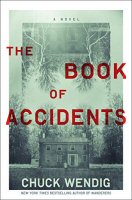
Book Review: The Book of Accidents by Chuck Wendig

The Book of Accidents
by Chuck Wendig (Wendig)

My SciFi/Fantasy/Horror book group read this for a book discussion in November 2021, following recommendations of past Wendig titles that some group members had read.


I would describe The Book of Accidents as “Stephen King Lite” — it really felt like someone trying to capture the feel and tone of an early King novel — think back to the days of Firestarter, ‘Salem’s Lot, Cujo and The Tommyknockers.


The family of Nate Graves, his artist wife Maddie and their slightly autistic son Oliver move to Nate’s childhood home following the death of Nate’s abusive, estranged father and his inheritance of the old rambling house that the father had lived in his entire life. Ollie is a highly-sensitive empath, able to “see” and feel the pain of others, and the hope is that having him in a more remote, less “big-city” location will make Ollie more able to deal with his unfortunate gift. But life isn’t that simple — and not long after the Graves family moves in, odd paranormal things start happening, that both pull the family closer together and simultaneously try to pull them apart.


The Book of Accidents features a lot of well-drawn characters, from the new next-door neighbor with a passion for the unexplained, to Nate’s new state field & game partner, to Ollie’s group of D&D misfits. Unfortunately, the “big bads” of this story are portrayed with too broad a stroke, and the supernatural elements seem to be all over the place in terms of making any coherent sense.


I liked this one, for some of the scenes and moods it established, but overall it felt like an overfilled mish-mash of too many ideas crammed together without any of them given enough focus to hold up. Too bad…because I really would have enjoyed seeing a tighter, more-streamlined book that focused on the bits that were really good.


But…if you’re a fan of early Stephen King, you may enjoy this more than I did.


( official The Book of Accidents page on the official Chuck Wendig web site )


Recommended by Scott C.
Bennett Martin Public Library — Public Service


Have you read or listened to this one? What did you think? Did you find this review helpful?


New reviews appear every month on the Staff Recommendations page of the BookGuide website. You can visit that page to see them all, or watch them appear here in the BookGuide Blog individually over the course of the entire month. Click the tag for the reviewer's name to see more of this reviewer’s recommendations!

Friday, December 17, 2021

Music Book Review: Arcana X: Musicians on Music, edited by John Zorn

Arcana 10: Musicians on Music

by John Zorn (Music 780.904 Arc V. 10)


In editor John Zorn’s preface to Arcana X, it becomes clear that he considers this 10th volume in the series to be the final volume. As a reader since the first Arcana was published in 2000, I’m bummed to hear that we’ve reached the end of this series, but incredibly grateful for the journey. If I had to choose one set of books in the Polley Music Library that have had the greatest impact on my own musical thinking and work, it would be the Arcana series.


Like all of the Arcana books, this is a collection of essays written by contemporary working musicians across a wide range of musical backgrounds. The topics and styles of each essay can vary widely — some talk specifically about their own musical practices or influences in a straightforward manner, others take philosophical, poetic, or academic approaches, and others are downright playful, creating theatrical skits to illustrate their ideas. My favorite thing about all of these books is that you’re likely to read about some artists you already know, but you’re just as likely to read about some new-to-you artists that you’re sure to love. For me, I was delighted to read composer Charlie Looker’s intense philosophical considerations toward using melismatic passages in his music, a touching autobiographical recap from legendary drummer Dave Lombardo, and an inspiring discussion of the pedal steel guitar and its unusual quirks by Susan Alcorn, among other great essays. And new-to-me artists in this volume include composer/trombonist Alex Paxton and young composer Ben Coniguliaro, both of whose music seems to have a certain resonance with their writing styles.


Most of the essays in this final volume were written during the pandemic conditions of 2020, so some artists were pursuing ideas they’d never had the time to consider in their usual rushed schedules as professional musicians. Composer David Hertzberg writes of developing a new relationship with the recordings of John Coltrane, for example, and violinist Stefan Jackiw details his time thinking about and playing through sections of Beethoven’s Violin Concerto. Perhaps my favorite essay here is by German composer Ulrich Krieger, who writes convincingly about our current moment in music history as being on the cusp of an unprecedented transition toward freer and fuller musical futures. But you really can’t go wrong reading anything in Arcana X — in a period of uncertainty, the optimism and dedication of all of these artists is a reward unto itself for readers.


Like the other volumes in the series, the main essay section is followed by short biographies for each contributor and recommended listening lists for each. My advice: read the essays, and if someone especially captures your imagination, flip to the back and track down some examples of their music from the listening list. If you’re like me, you’ll find yourself repeating this process many times, and your own listening and music-making will become all the better for it.


(If you enjoy this, you may also wish to try Arcana: Musicians on Music, Arcana volume II and Arcana Volume IX, all edited by John Zorn.)


( official Tzadik – John Zorn web site )


Recommended by Scott S.
Polley Music Library

Have you read or listened to this one? What did you think? Did you find this review helpful?


New reviews appear every month on the Staff Recommendations page of the BookGuide website. You can visit that page to see them all, or watch them appear here in the BookGuide Blog individually over the course of the entire month. Click the tag for the reviewer's name to see more of this reviewer’s recommendations!

Check out this, and all the other great music resources, at the Polley Music Library, located on the 2nd floor of the Bennett Martin Public Library at 14th & "N" St. in downtown Lincoln. You'll find biographies of musicians, books about music history, instructional books, sheet music, CDs, music-related magazines, and much more. Also check out Polley Music Library Picks, the Polley Music Library's e-mail newsletter, and follow them on Facebook!


Friday, November 19, 2021

Music Book Review: Hidden in the Mix: The African-American Presence in Country Music by Diane Pecknold

Hidden in the Mix: The African-American Presence in Country Music
by Diane Pecknold (Music 781.642 Hid)


There’s been a meme going around recently that lists a number of music genres with origins in black culture: “Blues came from black culture, jazz came from black culture,” rock n roll, funk, soul, disco, hip hop, house, and so on. The country music genre isn’t part of the list, and country is often discussed in terms of having come from folk music origins that trace mostly back to Western Europe.


But the truth is more complicated. A good portion of what made country music unique from its European folk counterpart is how it absorbed influences from black musical forms in the United States. Some of these were stylistic — blues music and jazz are obvious influences on country music, for example. Even musical instruments were absorbed from black culture: the banjo is a uniquely African-American invention, developed as a refinement of some West and South African instruments like the kora and the akonting.


In Hidden in the Mix, edited by Diane Pecknold, we find a collection of 12 great essays that look at the foundational influence of black music on the development of country music, the continued relationships between later forms of black music like soul and hip hop with more modern styles of country, and the experiences of early African-American country music performers as they navigated musical scenes and eras that were often hostile to their participation. Here we can learn about the history of artists like Arnold Shultz, a guitarist whose style was pivotal to the development of bluegrass music, and Fiddlin’ Bill Livers, known as the last African-American old-time fiddler from Kentucky, who suffered horrible racist attacks in childhood but grew up to be a dynamic entertainer who could bring white and black crowds together.


In the early days of the recording industry, we learn about the marketing of so-called “race” and “hillbilly” records, and how there was substantial participation by black artists in the “hillbilly” music of the time. On the more contemporary side of the spectrum, Adam Gussow’s essay “Playing Chicken With the Train” explores the trend of hip hop/country crossover tracks, a phenomenon that has become even more popular in the years just after this book was published, with tunes like the massive Lil Nas X hit “Old Town Road.” All told, this is a great book that presents a solid overview of the black influence on country music between its many well-researched essays. There’s a great bibliography at the back of the book for further reading on the topic, too.


(If you enjoy this, you may also wish to try Segregating Sound: Inventing Folk and Pop Music in the Age of Jim Crow by Karl Hagstrom Miller, or Country Soul: Making Music and Making Race in the American South by Charles L. Hughes.)


( publisher’s official Hidden in the Mix web site )


Recommended by Scott S.
Polley Music Library


Have you read or listened to this one? What did you think? Did you find this review helpful?


New reviews appear every month on the Staff Recommendations page of the BookGuide website. You can visit that page to see them all, or watch them appear here in the BookGuide Blog individually over the course of the entire month. Click the tag for the reviewer's name to see more of this reviewer’s recommendations!


Check out this, and all the other great music resources, at the Polley Music Library, located on the 2nd floor of the Bennett Martin Public Library at 14th & "N" St. in downtown Lincoln. You'll find biographies of musicians, books about music history, instructional books, sheet music, CDs, music-related magazines, and much more. Also check out Polley Music Library Picks, the Polley Music Library's e-mail newsletter, and follow them on Facebook!
 

Friday, June 25, 2021

Music Book Review: A Sound Mind by Paul Morley

A Sound Mind: How I Fell in Love With Classical Music (and Decided to Rewrite Its Entire History)

by Paul Morley (Music 781.68 Mar)


Author Paul Morley is no stranger to writing about music. He’s been a music journalist for 40 years, mostly focusing on pop and rock music, and he’s written several books about bands such as Joy Division and David Bowie. He was also one of the founding members of the early digital sampling pioneers The Art of Noise, and is said to have helped with early publicity for the band Frankie Goes to Hollywood.


Until now, though, Morley was only known for his pop criticism. Then technology changed, streaming music became possible, and he found himself expanding his horizons into jazz and classical music, at first during travel downtimes. As his musical horizons became more inclusive, he also became philosophical about the era of his youth, the “album era,” and how short-lived it might be compared to other ways of consuming and thinking about music. Before you know it, he was headlong into classical music, and he shares his new journey with us in his latest book, A Sound Mind.


Morley’s style is one of the most appealing things about this book — he does check some boxes for music history and biographical information throughout the book, but fundamentally this works as a memoir that happens to document his own investigation into classical music. He’s worked successfully with this kind of approach before in his 2000 book “Nothing,” which reflected on his own childhood and the suicide of his father while considering the work of Ian Curtis (Joy Division), Elvis, and Marc Bolan. Where that book focuses on the darker side of life and missed opportunities, though, this book seizes the moment and finds new life in the embrace of centuries of music that might have been overlooked by many of us surrounded by contemporary rock and pop records.


One of my favorite things about this book is how capably Morley weaves modern and older classical traditions together. He’s discovering and enjoying this music in a modern, hyperlinked kind of way, so he looks for asynchronous associations that many of us who have studied all of these works chronologically might not have considered before. These movements through time are beautifully depicted in playlists that periodically illustrate points throughout the book. Moving at one point between Bach, Steve Reich, Beethoven, George Crumb, Kraftwerk, Keith Jarrett, and Thomas Arne, for example, turns out to be an incredible experience. This book proves to be a great introduction to classical music, and a breath of fresh air for those of us already on the inside.

[If you enjoy this, you may also wish to try RIYL: Mozart in the Jungle: Sex, Drugs and Classical Music by Blair Tindall, or Year of Wonder: Classical Music to Enjoy Day by Day by Clemency Burton-Hill.]

[ publisher’s official A Sound Mind web page ]


Recommended by Scott S.
Polley Music Library


Have you read or listened to this one? What did you think? Did you find this review helpful?


New reviews appear every month on the Staff Recommendations page of the BookGuide website. You can visit that page to see them all, or watch them appear here in the BookGuide Blog individually over the course of the entire month. Click the tag for the reviewer's name to see more of this reviewer’s recommendations!


Check out this, and all the other great music resources, at the Polley Music Library, located on the 2nd floor of the Bennett Martin Public Library at 14th & "N" St. in downtown Lincoln. You'll find biographies of musicians, books about music history, instructional books, sheet music, CDs, music-related magazines, and much more. Also check out Polley Music Library Picks, the Polley Music Library's e-mail newsletter, and follow them on Facebook!

Thursday, June 24, 2021

Book Review(s): The Zig Zag Girl and Smoke and Mirrors by Elly Griffiths

The Zig Zag Girl
and Smoke and Mirrors

by Elly Griffiths (Griffiths)


In April 2021, the libraries’ Just Desserts mystery fiction discussion group reading assignment was to sample one or more of the series novels written by British mystery author Elly Griffiths. Having long been a fan of stage magicians, and fondly remembering the 1973-1974 Bill Bixby TV series The Magician (featuring a crime-solving prestidigitator), I decided to try The Zig Zag Girl, first in a 1950s-set series that features a team-up between Max Mephisto, star stage magician, and his old Army friend turned small town police detective Edgar Stephens. I ended up enjoying the first one so much, I immediately read the second entry, Smoke and Mirrors as well. Both are very good, but actually have somewhat different tones.


In The Zig Zag Girl, a brutal murder of a young woman occurs, in which her body is cut into thirds, much like a stage illusion done by Max Mephisto. The senior detective on the case, Edgar Stephens, served with Max in WWII, in a unit called The Magic Men, comprised of magicians and illusionists, who were tasked with creating large-scale illusions to fool the Germans into believing the English coast was better-defended than it actually was. Edgar calls on Max’s magic-trick background for advice, but then more murders occur, each tied in some way to the old Magic Men unit. The characters are engaging, with the magician angle in the 1950s providing a fresh viewpoint. There’s a strong sense of place, in the British seaside town of Brighton. And the mystery of a young woman who’s appeared who may have some connection to Max’s past is intriguing. The mystery itself is fairly commonplace and easy for the reader to solve, so the fun here is getting to know the characters.


In Smoke and Mirrors, two young children are murdered and their bodies left to be discovered in a staged tableau, but are hidden by a snowstorm. Edgar, once again in charge of the investigation once the bodies are found, finds himself emotionally torn up by the events. Fortunately, Max is appearing in a nearby musical comedy stage show, where his illusion skills are put to good use, and is there to provide insight. New recurring characters are introduced (who will become even more prominent in subsequent entries), and the mystery is a lot more complex this time. But this one has a much darker feel than the first one in the series.


I really like this series, especially the friendly relationship between Edgar and Max, and look forward to reading more — there are five so far with a sixth due in late 2021. If you like a 1950s time frame, police procedurals, or the world of stage performers (particularly magicians or illusionists), you’ll probably enjoy this series.

[If you enjoy these, I recommend trying to track down the following TV shows featuring stage magicians, illusionists or mentalists who help solve crimes: The Magician (1973-74, 22 episodes), starring Bill Bixby; Blacke’s Magic (1986, 13 episodes), starring Hal Linden and Harry Morgan; Jonathan Creek (1997-2016 — a UK show with 26 episodes with several year gaps between seasons) starring Alan Davies; The Mentalist (2008-2015, 151 episodes) starring Simon Baker and Robin Tunney; and Deception (2018, 13 episodes) starring Jack Cutmore-Scott.]

 [ official The “Brighton Mysteries” page on the official Elly Griffiths web site ] 


Recommended by Scott C.
Bennett Martin Public Library — Public Service


Have you read or listened to these? What did you think? Did you find this review helpful?


New reviews appear every month on the Staff Recommendations page of the BookGuide website. You can visit that page to see them all, or watch them appear here in the BookGuide Blog individually over the course of the entire month. Click the tag for the reviewer's name to see more of this reviewer’s recommendations!


Hey mystery fans! Don't miss this month's Just Desserts mystery fiction discussion group where we'll be discussing the "Jack McEvoy" series novel Fair Warning by Michael Connelly. The June  2021 Just Desserts meeting, returning to "in-person" meetings for the first time since February 2020, will be tonight at 6:30 p.m. to 7:45 p.m. in the 4th floor auditorium of the Bennett Martin Public Library downtown at 14th & "N" St. For more information, check out the Just Desserts schedule at https://lincolnlibraries.org/bookguide/book-groups/#justdesserts

Friday, June 18, 2021

Music Book Review: Mad Skills - Midi and Music Technology in the 20th Century by Ryan Alexander Diduck

Mad Skills: Midi and Music Technology in the 20th Century

by Ryan Alexander Diduck (Music 786.7 Did)


The MIDI (Musical Instrument Digital Interface) specification, which allows multiple digital instruments to communicate with each other, was recently approved for update to a new MIDI 2.0 standard, the first major update to its functionality since the 1.0 standard was adopted in 1985. Think of how often your computers or phones or tablets need software updates, and consider how well-designed a software standard must have been to survive without significant changes for 35 years!


On the surface, software standards might not be the most exciting aspect of music-making, but the truth is that MIDI allowed unparalleled possibilities with digital music that have changed our musical landscape. Before MIDI, synthesizers and other digital electronic musical instruments could only interface through proprietary systems made by their own manufacturers, if at all. Once MIDI was in place, a musician could use products made by any company, and all of them could be used together in large, complex systems. Computer systems could also implement MIDI, making it a great way to combine hardware and software setups. A lot of the most cutting-edge music being made today still relies on MIDI.


In Mad Skills: Midi and Music Tech in the 20th Century by Ryan Alexander Diduck, we leave the more contemporary deployments of MIDI technology behind, and look at the development of the specification and its uses through the late 1990s. Diduck heads even further back in history to find music-tech antecedents that required standardization, like piano rolls for player pianos, and then he looks at the complex circumstances that led to MIDI. Music industry advocacy organizations and trade unions played roles just as important at times as hardware and software engineers, creative visionaries, and startup computer companies. After laying out the history of MIDI, he goes on to compare its functionality to some of the proprietary systems it replaced, and outlines how the General MIDI specification that arrived in 1992 served as a kind of simplified deployment of the specification to streamline its use in non-professional environments. Finally, he explores the initial proposals and failure to introduce a MIDI 2.0 spec in the late 1990s, a task just now being realized 20 years later.


The topic turns out to be much more interesting to read about than I would have guessed initially. To some degree, the story of MIDI reminded me of the early days of the electric guitar, when market forces and maverick designers met in unexpected ways. I’d particularly recommend this book for electronic music producers, but even folks who are just interested in the history of evolving technology will find something to love here.

[If you enjoy this, you may also wish to try How to Wreck a Nice Beach: The Vocoder from World War II to Hip-Hop by Dave Tompkins, or How Music Works by David Byrne.]

[ publisher’s official Mad Skills web page ] | [ official Ryan Diduck blog ]


Recommended by Scott S.
Polley Music Library


Have you read or listened to this one? What did you think? Did you find this review helpful?


New reviews appear every month on the Staff Recommendations page of the BookGuide website. You can visit that page to see them all, or watch them appear here in the BookGuide Blog individually over the course of the entire month. Click the tag for the reviewer's name to see more of this reviewer’s recommendations!


Check out this, and all the other great music resources, at the Polley Music Library, located on the 2nd floor of the Bennett Martin Public Library at 14th & "N" St. in downtown Lincoln. You'll find biographies of musicians, books about music history, instructional books, sheet music, CDs, music-related magazines, and much more. Also check out Polley Music Library Picks, the Polley Music Library's e-mail newsletter, and follow them on Facebook!

Wednesday, June 16, 2021

Book Review: Hench by Natalie Zina Walschots

Hench

by Natalie Zina Walschots (Walschots)


I really, desperately, wanted to love this novel. I was intrigued by the concept. Hench is told from the point of view of Anna Tromedlov, a tech-savvy young woman who’s part of the workforce employed by supervillains, in a world where super-powered heroes and villains are somewhat commonplace. Being a “hench” is just a job, but can sometimes be a well-paying one. Anna is required by her employer to appear at a public event (as a token female among his henchmen), and she ends up being badly injured when an overly-muscled superhero (Supercollider) shows up to battle the bad guy and causes a lot of collateral damage.


While recovering, Anna starts to gather statistical data about others who’ve suffered as “collateral damage” when heroes’ actions proved to be highly destructive. In fact, the actions of “heroes” might even be more detrimental to ordinary citizens than the petty schemes of villains whom they oppose. Which brings her to the attention of one of the most powerful and vengeful villains (Leviathan)…who hires her to continue her research and come up with ways to harass the heroes with bad P.R.


Anna’s journey, from the near-poverty of having to scrape by on temp jobs, to brilliant mastermind of complicated strategies, in charge of an entire tech team to enact them, is fascinating. Unfortunately, though the author does a good job of showing that there are amoral “good guys” and well-meaning “bad guys” in the world of this novel, I never got to the point where I was actually rooting for Anna…her easy embrace of the villains and their objectives was disturbing. Don’t get me wrong, Walschots is an excellent writer, and this story is told very well, but I, personally, never found myself rooting for any of the characters, especially the narrator. Your mileage may vary…and, in fact, if you enjoy stories about comic-book style superheroes and villains, told from different and unique vantage points, you’ll actually probably enjoy Hench very much!

[ publisher’s official Hench web page ] | [ official Natalie Zina Walschots web site ]


Recommended by Scott C.
Bennett Martin Public Library — Public Service


Have you read or listened to this one? What did you think? Did you find this review helpful?


New reviews appear every month on the Staff Recommendations page of the BookGuide website. You can visit that page to see them all, or watch them appear here in the BookGuide Blog individually over the course of the entire month. Click the tag for the reviewer's name to see more of this reviewer’s recommendations!

Friday, June 11, 2021

Music Book Review: Hold On to Your Dreams: Arthur Russell and the Downtown Music Scene: 1973-1992 by Tim Lawrence

Hold On to Your Dreams: Arthur Russell and the Downtown Music Scene: 1973-1992

by Tim Lawrence (Music 780.92 Rus)


Midwestern native and musical maverick Charles Arthur Russell, better known as Arthur Russell to his fans, didn’t release a lot of material during his all too short lifetime, but his work has received a lot of posthumous attention in recent years, particularly with the excellent “Iowa Dream” album released last year. Here at the Polley Music Library, we have the definitive biography on Arthur Russell’s unique music, Hold On to Your Dreams: Arthur Russell and the Downtown Music Scene: 1973-1992 by Tim Lawrence, published in 2009.


The book doesn’t spend much time on Russell’s early years, where he grew up in Oskaloosa, Iowa, and then spent some of his high school years in Iowa City. Instead, it spends the vast majority of its time on his tenure in New York City, which extended from 1973 until his death in 1992, during which he was a part of the vital “downtown scene.” He still had some affection for his Midwestern roots, though, occasionally returning home to visit family, and naming a few tunes after Midwestern memories, like “Corn” and “Iowa Dream.”


For most of his career, he was an excellent example of the unique musicians who came up in New York’s 80s downtown scene. Of particular interest in that era, many composers thought of themselves more as composer-performers, an extension of the kinds of work one saw from minimalist composers like Steve Reich and Phillip Glass who ran and performed in their own working ensembles. In the downtown scene, many such composer-performers collaborated with one another to realize compositions of various sizes and scales.


There was also lots of cross-genre music happening. Particularly in the late 70s and early 80s, this was the time and place where new forms of dance and experimental music were coming out of the clubs in New York, and rap music was new to the airwaves. For a few glorious years, all kinds of music intermingled both on dance floors and sometimes among performers who found themselves working in myriad new directions with their music. Arthur Russell, whose formal background was initially as a cello player, found himself moving freely between pop and avant-garde musical worlds, producing dance singles, writing folk and pop songs, and practically inventing a new genre of ambient art-rock with his electronically-manipulated cello and voice album “World of Echo” from 1986.


Toward the end of the book, Lawrence addresses the impact of the AIDS epidemic on New York’s music and club scenes, as well as on Arthur Russell personally. Russell’s health suffered from the disease over the last few years of his life, and he worked at a frantic pace to complete as much music as he could. He may have left us far too soon, but he devoted his final years to producing recordings that still continue to be released 30 years later.

[If you enjoy this, you may also wish to try New York Noise: Radical Jewish Music and the Downtown Scene by Tamar Barzel, or Life and Death on the New York Dance Floor, 1980-1983 by Tim Lawrence.]

[ official Hold On to Your Dreams page on the official Tim Lawrence web site ]


Recommended by Scott S.
Polley Music Library


Have you read or listened to this one? What did you think? Did you find this review helpful?


New reviews appear every month on the Staff Recommendations page of the BookGuide website. You can visit that page to see them all, or watch them appear here in the BookGuide Blog individually over the course of the entire month. Click the tag for the reviewer's name to see more of this reviewer’s recommendations!


Check out this, and all the other great music resources, at the Polley Music Library, located on the 2nd floor of the Bennett Martin Public Library at 14th & "N" St. in downtown Lincoln. You'll find biographies of musicians, books about music history, instructional books, sheet music, CDs, music-related magazines, and much more. Also check out Polley Music Library Picks, the Polley Music Library's e-mail newsletter, and follow them on Facebook!